

























Common Men Assembly Urges Tinubu to Sustain Tantita's Oil Infrastructure Protection System




By Tessy Ogbemi
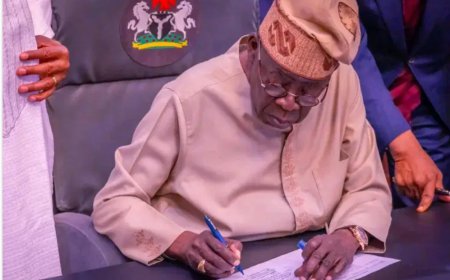
A coalition of professionals under the aegis of the Common Men Assembly (CMA) has called on President Bola Ahmed Tinubu to sustain the operational model driven by Tantita Security Services Nigeria Limited for securing critical oil installations in the Niger Delta.
The group, whose membership cuts across oil and gas engineering, pipeline integrity management, energy economics, maritime security, environmental risk assessment, and community conflict resolution, said its position is rooted in technical evaluation and field experience.
In a statement jointly signed by Chairman Jude Angodideke, Secretary General Miepekumo Brialade, and Spokesman Duopayoebiyo Akemotubo, the Assembly stressed that its recommendation is driven by the need to protect Nigeria’s economic backbone.
“Our membership includes experts with direct field experience in pipeline surveillance systems, asset protection architecture, crude oil logistics, and the socio-economic dynamics of host communities in the Niger Delta,” the statement read. It added that the position represents a multidisciplinary technical assessment grounded in operational data and national economic priorities, rather than sentiment or narrow advocacy.
CMA recalled that before the introduction of the current surveillance framework in August 2022, Nigeria’s oil sector was in severe distress, with production dropping to between 1.0 and 1.2 million barrels per day—well below the quota set by the Organization of the Petroleum Exporting Countries.
The group noted that crude oil theft and pipeline vandalism accounted for losses of up to 700,000 barrels per day, translating into billions of dollars in lost revenue and weakening both federal and state finances.
The situation was particularly dire in the Niger Delta, where illegal bunkering and refining activities became widespread. According to CMA, hundreds of illegal refining sites operated openly, crude evacuation through illicit channels became routine, and pipeline breaches were frequent and often unattended.
These developments led to declining foreign exchange earnings, rising debt pressure, and reduced investor confidence, marking what the group described as an economic emergency.
However, the Assembly said the engagement of Tantita Security Services Nigeria Limited brought a measurable turnaround.
Within months, oil production rebounded to between 1.5 and 1.7 million barrels per day, while crude oil theft declined significantly. Illegal refining sites were dismantled, and surveillance across creeks and offshore corridors became more effective.
Beyond the statistics, the group highlighted a shift in community behaviour and stakeholder confidence. It noted that communities began aligning with lawful economic structures, while trust in the system improved, resulting in more stable budget projections and renewed investor interest.
CMA further explained that under the leadership of Government Oweizide Ekpemupolo and Kestin Ebimorbowei Pondi, the Tantita framework has evolved into a stabilisation mechanism that combines disciplined command structures with local intelligence networks and community acceptance.
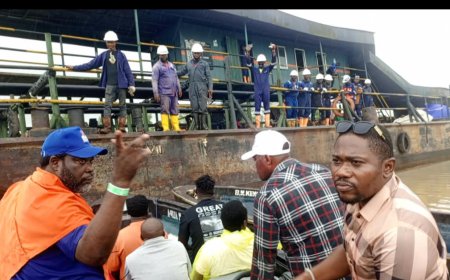
The system, it added, is driven by clear operational hierarchy, continuous intelligence gathering from host communities, rapid response capabilities, and deep familiarity with the terrain. It has also created over 20,000 direct jobs, integrating local youths into asset protection efforts and reducing incentives for criminal activities.
According to the Assembly, measurable outcomes since implementation include improved crude oil production levels, reduced pipeline vandalism, disruption of organised oil theft networks, and a decline in illegal maritime crude evacuation.
These gains have translated into increased government revenue, improved fiscal stability, and strengthened investor confidence.
The group also pointed to broader impacts, including economic inclusion through job creation, environmental protection via the shutdown of illegal refineries, and reduced oil spill incidents.
It added that community engagement and collaboration with local leaders have significantly lowered tensions and improved cooperation across the region.
CMA warned that pipeline security must be treated as a central economic priority, noting that any disruption directly affects revenue, production capacity, and Nigeria’s international credibility. It cautioned that decentralising the current system could weaken coordination, intensify disputes, and expose infrastructure to renewed sabotage.
The Assembly advised President Bola Ahmed Tinubu to resist sectional pressures, prioritise evidence-based decisions, and strengthen systems that have demonstrated measurable success, while maintaining proper institutional oversight.
It concluded that the current framework has delivered stability and economic improvement, urging the government not to abandon a working model but to prioritise national interest and protect proven results.
What's Your Reaction?
 Like
0
Like
0
 Dislike
0
Dislike
0
 Love
0
Love
0
 Funny
0
Funny
0
 Angry
0
Angry
0
 Sad
0
Sad
0
 Wow
0
Wow
0