



















From Struggle to Betrayal: Why Oil-Producing Communities Must Take Back Their 13% Derivation



By Kagbala Bulou-ebi Kagbala
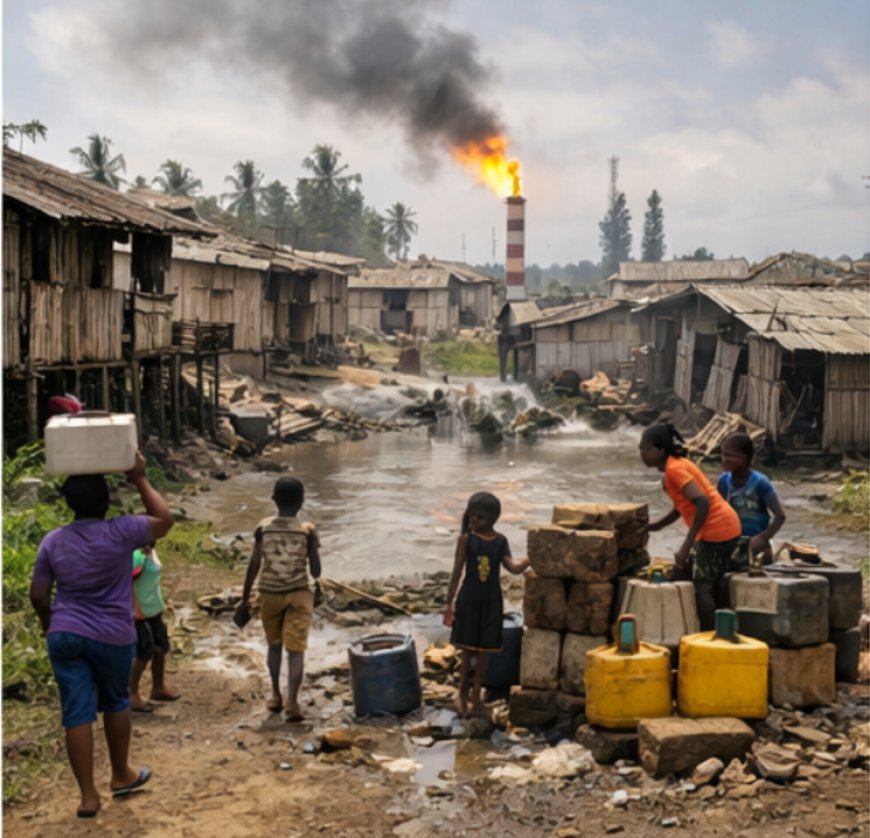
Across Nigeria’s oil belt stretching through Akwa Ibom, Bayelsa, Cross River, Delta, Edo Ondo and Rivers States, the scars of oil exploration are impossible to ignore.
Polluted creeks, devastated mangroves, collapsing farmlands and vanishing fish stocks define daily life in communities whose land fuels the Nigerian economy. Yet, the governors who now control the 13 per cent derivation fund were never part of the struggle that gave birth to it.
This is the bitter irony at the heart of the Niger Delta question while oil-producing communities bear the environmental, health and economic costs of extraction, the compensation meant to cushion their suffering is routinely diverted far from them. The people pay the price; the benefits flow elsewhere.
The 13 per cent derivation was not conceived as a windfall for state governments. It was a product of resistance, sacrifice and constitutional advocacy by oil-bearing communities who demanded justice for lost livelihoods, poisoned environments and broken futures.
Today, that noble objective stands dangerously distorted. Legally, the current practice is deeply flawed. Section 162(2) of the 1999 Constitution (as amended) provides that “not less than thirteen per cent of the revenue accruing to the Federation Account directly from any natural resources shall be paid to the states from which such resources are derived.”
Crucially, the “state” in this context is not synonymous with the state government. Oil and gas sit firmly on the Exclusive Legislative List, and the administrative decision dating back to the Obasanjo era to funnel derivation funds into the pockets of governors represents a constitutional misinterpretation that has outlived its legitimacy.
For years, this anomaly has enabled massive resource capture, leaving host communities stranded in poverty amid plenty. Roads remain impassable, schools dilapidated, health centres ill-equipped, and shoreline erosion unchecked, even as derivation allocations rise year after year.
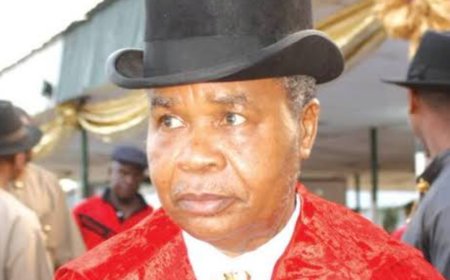
For over a decade, Chief (Dr.) Wellington O. Okirika, CON, through the Host Communities of Nigeria Producing Oil and Gas (HOSTCOM), has consistently opposed the routing of the 13 per cent derivation solely through state governments. His argument has remained clear and principled, such an arrangement defeats the spirit of the law and amounts to the hijack of the socioeconomic rights of oil-producing communities.
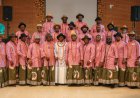
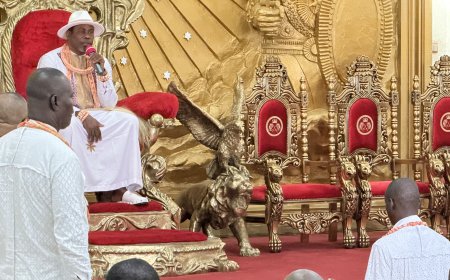
Traditional rulers of the Niger Delta have also long understood this injustice. Their collective response gave birth to the Association of Traditional Rulers of Oil Mineral Producing Communities of Nigeria (TROMPCON), formed to confront decades of neglect, marginalization and broken promises.
These royal fathers have repeatedly insisted that derivation funds must translate into visible grassroots development roads, schools, healthcare, environmental remediation and livelihood restoration.
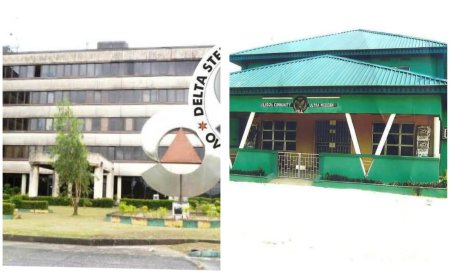
Intervention bodies like DESOPADEC in Delta State were established to help bridge this gap. Yet, persistent concerns over politicisation, limited reach and funding inadequacy continue to raise questions about whether such institutions truly match the scale of devastation in oil-bearing areas.
In just the first half of 2025, nine oil-producing states Abia, Akwa Ibom, Anambra, Bayelsa, Delta, Edo, Imo, Ondo and Rivers—shared over ₦881 billion in derivation revenue, with Delta State among the top beneficiaries. Still, many oil-host communities remain without basic infrastructure or economic opportunities.
This widening gap between revenue inflows and lived reality has strengthened calls for the establishment of a Derivation Board and a Presidential Monitoring Committee to ensure transparency, accountability and direct impact at the community level.
Civil society organisations are no longer silent. The Niger Delta Civil Society Forum has urged the Federal Government under President Bola Ahmed Tinubu, the National Assembly led by Senate President Godswill Akpabio, and the Revenue Mobilisation, Allocation and Fiscal Commission (RMAFC) to put in place institutional mechanisms that guarantee direct access of host communities to derivation funds.
PANDEF has also thrown its weight behind this demand. Its spokesman, Chief Dr. Ominimini Obiowowin, has openly aligned with the call for direct payment of the 13 per cent derivation to host communities, insisting that regions sustaining Nigeria’s economy deserve tangible development not perpetual neglect.
Despite this growing momentum, one critical stakeholders decisively chairmen of oil-producing communities. As the closest leaders to the people, they occupy a strategic position to mobilise grassroots support, articulate local needs and engage governments with legitimacy and urgency.
Silence or passivity at this moment would amount to abandoning a historic opportunity. The derivation fund was designed to compensate communities for destroyed farmlands, lost fishing rights, health hazards and environmental degradation. Any framework that excludes them violates both justice and common sense.
The struggle for derivation did not begin today. Chief (Dr.) Wellington O. Okirika—celebrated nationwide as “Mr. 13% Derivation Fund” played a decisive role at the 1994–1995 Constitutional Conference, where derivation was raised from a paltry 3 per cent to 13 per cent. His life’s work, captured in his book, “Mr. 13% Derivation Fund: The Life and Legacy of Chief (Dr.) Wellington O. Okirika, CON,” stands as enduring proof that progress is secured through courage, persistence and collective action.
Today, ignorance, poor information flow and entrenched interests can no longer serve as excuses. Oil-producing community chairmen must speak truth to power, unite across ethnic and state lines, and openly support the legal implementation of the 13 per cent derivation directly to host communities
The push is no longer optional; it is inevitable. History will remember those who stood up to reclaim a constitutional promise for their people and those who remained silent while opportunity slipped away. For the Niger Delta, the time to act is now.
Powered by
Niger Delta Civil Society Forum
Feedback 0803890546
What's Your Reaction?
 Like
0
Like
0
 Dislike
0
Dislike
0
 Love
0
Love
0
 Funny
0
Funny
0
 Angry
0
Angry
0
 Sad
0
Sad
0
 Wow
0
Wow
0