














N-Delta group faults RMAFC Chair, insists 13% Derivation belongs to Host Communities, not States



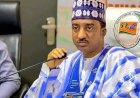
The Niger Delta Civil Society Forum has faulted the Chairman of the Revenue Mobilisation Allocation and Fiscal Commission (RMAFC), Dr. Mohammed Bello Shehu, over his reported position that States where minerals are produced should be the beneficiaries of the 13 per cent derivation revenue from crude oil and gas.
The group in an open letter to the chairman said, "such a position amounts to a grave misinterpretation of the Constitution and a betrayal of the historical purpose of derivation".
The group stressed that "oil-producing host communities, not state governments are the rightful and original beneficiaries of the 13 per cent derivation principle".
These were contained in an open letter signed by the Coordinator of the Forum, Comrade Ezekiel Kagbala, copies of which were made available to journalists on Tuesday in Warri Delta State.
The letter described the RMAFC Chairman’s position as “a dangerous distortion of constitutional intent and historical truth.”
The letter partly read, "The derivation principle was established to compensate oil-bearing communities for decades of environmental devastation, loss of livelihoods, health hazards, and socio-economic displacement caused by oil and gas exploration.
“Oil-producing communities in Akwa Ibom, Cross River, Bayelsa, Edo, Ondo, Rivers and Delta States are the rightful beneficiaries of the 13 per cent derivation.
"Any policy, interpretation or administrative action that diverts these funds exclusively to State governments is a continuation of the injustice that host communities have suffered for decades".
While maintaining that "Derivation is Restitution, not Political Allocation", the Forum warned that "ongoing efforts by the Federal Government to resolve oil well ownership disputes purely in favour of State governments without concrete mechanisms to guarantee direct benefits to host communities amount to criminal exclusion of the true custodians of Nigeria’s oil wealth".
The group emphasized that "the 13 per cent derivation was constitutionally conceived as restitution for Environmental degradation, Pollution of rivers and farmlands, Destruction of fishing and farming livelihoods, Displacement of indigenous populations, Long-term health and social consequences of oil exploration".
The statement continued, “What is happening today is nothing short of the hijack of derivation funds meant for grassroots development.
"Communities that produce the wealth still lack clean water, access roads, healthcare, electricity and schools, while billions are shared at the State level with little or no impact on oil-bearing areas".
The Niger Delta Civil Society Forum therefore called on President Bola Ahmed Tinubu and the National Assembly to "urgently intervene by establishing a Derivation Board and a Presidential Monitoring Committee to guarantee Direct allocation of derivation funds to host communities".
"The Presidential intervention will also guarantee transparent management of the funds, accountability in project implementation, as well as community-driven development priorities", the group stated.
It added that "such a framework would restore the original spirit of the Constitution and finally deliver justice to communities that have carried the burden of Nigeria’s oil economy for over six decades".
It will be recalled that Dr. Mohammed Bello Shehu had earlier disclosed that RMAFC, in collaboration with the Nigerian Upstream Petroleum Regulatory Commission (NUPRC) and other agencies, established an Inter-Agency Technical Committee to physically verify the locations of oil and gas wells nationwide.
But the Niger Delta Civil Society Forum maintained that while technical verification may resolve disputes between States, it fails to address the deeper injustice against host communities.
"Bello Shehu and RMAFC must not continue to bend the law in favour of political structures while ignoring the people whose lands, waters and lives have been sacrificed for Nigeria’s economic survival.", the Forum posited saying "the 13 per cent derivation must go directly to the communities”.
The Forum urged RMAFC, NUPRC and all relevant institutions to align their actions with the principles of equity, justice and constitutional responsibility, warning that continued marginalization of host communities could further fuel anger, distrust and instability in the Niger Delta.
Attached letter:
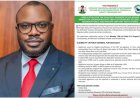
AN OPEN LETTER TO THE CHAIRMAN, RMAFC, DR. MOHAMMED BELLO SHEHU
STOP THE ECONOMIC VIOLENCE AGAINST NIGER DELTA COMMUNITIES
13% DERIVATION IS FOR THE PEOPLE, NOT POLITICAL ELITES
By: Niger Delta Civil Society Forum
Dear Dr. Mohammed Bello Shehu,
Chairman, Revenue Mobilisation Allocation and Fiscal Commission (RMAFC), We address you not with pleasantries, but with the justified anger of a people who have endured decades of betrayal, exploitation and institutional injustice.
Your reported position that states rather than oil-producing host communities — are the beneficiaries of the 13% derivation is deeply troubling. It represents not only a misreading of history and law, but a continuation of the systemic oppression that has kept Niger Delta communities impoverished while the nation prospers from their resources.
Let us be unequivocal: the 13% derivation was never intended for governors, commissioners, political parties, or state bureaucracies. It was created for the people whose lands bear the burden of extraction, whose rivers are polluted, and whose livelihoods have been destroyed.
Any interpretation contrary to this truth is a distortion of justice and amounts to economic violence against the Niger Delta people.
For over six decades, the Niger Delta has sustained Nigeria’s economy. Yet, our communities remain without clean drinking water, functional hospitals, quality schools, good roads, electricity, or employment opportunities. Our farmlands are devastated, our rivers poisoned, our children sick, and our youths increasingly frustrated. Meanwhile, the funds meant to alleviate these conditions the 13% derivation are routinely captured at the state level and shared among political elites. This reality stands in direct contradiction to the spirit of the derivation principle.
The derivation principle exists as compensation for: Environmental devastation Oil spills and gas flaring Loss of ancestral livelihoods Forced displacement
Long-term health damage
Intergenerational poverty
It is therefore morally, legally and historically indefensible to maintain a system where state governments, rather than the devastated host communities, are treated as the rightful beneficiaries.
Dr. Shehu, while we acknowledge your efforts through the inter-agency committee on oil well coordinates to address disputes between states, such measures do not confront the deeper injustice: the exclusion of host communities from the wealth extracted from their own soil. Technology cannot mask injustice. Bureaucracy cannot excuse oppression. Policy language cannot silence suffering.
Our Demands Are Clear and Non-Negotiable We therefore demand: Immediate steps toward direct allocation of the 13% derivation to host communities.
The establishment of a 13% Derivation Board with strong community representation.
The creation of a Presidential Monitoring Committee independent of state political control. Full transparency and public accountability in the management of derivation funds.
For record purposes, we also draw your attention to the November 2025 visit to your office by the Host Communities of Nigeria Producing Oil and Gas (HOSTCOM) and the Niger Delta Civil Society Organisations Forum. During that engagement, we collectively sought justice, equity, and constitutional compliance on the administration of the 13% Derivation Fund. At that meeting, you reportedly acknowledged that the derivation was meant for host communities and advised civil society to engage state governors. We therefore find it contradictory and concerning that your recent public position appears to deviate from that understanding.
It is also on record that you and the majority of federal commissioners supported the call for the creation of a 13% Derivation Board and a Presidential Monitoring Committee to guarantee transparency, accountability, and direct benefits to host communities — in alignment with constitutional principles and the spirit of federal equity.
Historical and Constitutional Foundation, The evolution of derivation underscores its intent:
1985 – Under General Ibrahim Babangida, derivation increased from 1.5% to 3%.1994 – Raised to 13% during the Constitutional Conference.1999 – Enshrined in Section 162(2) of the 1999 Constitution (as amended).
Section 162(2) further provides that the 13% derivation is a first-line charge on the Federation Account. By established legal interpretation, first-line charges are paid directly to beneficiaries, not routed through intermediaries. Consequently, it is constitutionally questionable for state governments or state assemblies to legislate upon, control, or divert derivation funds intended for host communities.
Furthermore, oil and gas remain on the Exclusive Legislative List, meaning only the President and the National Assembly possess the authority to legislate on matters relating to these resources. This makes state-level interference in derivation administration both improper and inconsistent with constitutional order.
Notably, under President Shehu Shagari’s administration (when derivation stood at 1.5%), a Presidential Monitoring Committee and State Management Committees were established to ensure accountability. The call for a 13% Derivation Commission and Presidential Monitoring Board is therefore not radical — it is a return to constitutional logic, administrative precedent, and moral responsibility.
Our Advice to the RMAFC Chairman.
We respectfully advise you, Dr. Shehu, to further guide your actions with reference to:
The Exclusive Legislative List (1999 Constitution as amended)
Section 162(2) of the 1999 Constitution (as amended)
Leadership Newspaper, September 7, 2008 – Report on Derivation and Fiscal Reform
The Revenue Allocation Bill on the 13% Derivation Fund and Derivation Board.
We do not desire conflict. But we will not accept silence in the face of injustice. The Niger Delta cannot continue to bleed while others feast on its resources. The 13% derivation must reach the host communities directly. Anything less is a continuation of oppression. History is watching. The people are watching. And the patience of the Niger Delta is not infinite.
Signed:
Comrade Ezekiel Kagbala
Coordinator, Niger Delta Civil Society Forum
Warri, Delta State
What's Your Reaction?
 Like
1
Like
1
 Dislike
0
Dislike
0
 Love
0
Love
0
 Funny
0
Funny
0
 Angry
0
Angry
0
 Sad
0
Sad
0
 Wow
0
Wow
0