


























13% Derivation Fund: Civil Society Accuses Institutions of Misleading Presidency, Calls on Tinubu to Act Before 2027




By David Zipamone
Civil society stakeholders in the Niger Delta have raised fresh concerns over the management of the 13 per cent derivation fund, warning President Bola Ahmed Tinubu against what they describe as growing institutional misinformation and constitutional distortion ahead of the 2027 general elections.
The Niger Delta Civil Society Forum (NDCSF) in a statement signed by its Coordinator, Comr. Ezekiel Kagbala on Tuesday, June 9th, 2026, alleged that recent interpretations being advanced by some federal institutions, including the Revenue Mobilisation Allocation and Fiscal Commission (RMAFC), are misleading the Presidency and undermining the original intent of the derivation principle.
According to the group, attempts to link the 13 per cent derivation fund to provisions outside the 1999 Constitution—particularly the Petroleum Industry Act (PIA)—are constitutionally incorrect and irrelevant to the derivation framework.
They insist that the PIA governs commercial relationships between international oil companies and host communities through operational cost obligations, while the 13 per cent derivation fund remains a constitutional provision under Section 162(2) of the 1999 Constitution, which guarantees that not less than 13 per cent of revenue from natural resources is returned under the principle of derivation.

The forum stressed that the derivation fund has no legal connection with the Petroleum Industry Act and should not be conflated with its provisions. It further argued that oil and gas matters fall under the Exclusive Legislative List, meaning neither state governments nor state assemblies have legislative authority over their constitutional interpretation or fiscal structure.
The group also recalled that oil and gas-producing communities led the struggle for resource justice during the 1994/95 Constitutional Conference under the leadership of Chief Dr. Wellington O. Okirika (CON), popularly referred to as “Mr. 13% Derivation Fund,” when Nigeria was under military rule and state governors were not part of the constitutional process.
NDCSF further expressed concern over what it described as contradictions in the position of RMAFC, alleging that the commission had at one point supported the creation of a 13% Derivation Fund Board through a bill forwarded to the 6th National Assembly in 2005, but later appeared to align with state-level control of the funds.
The forum warned that such inconsistency raises questions about institutional integrity and transparency in advising the Presidency on matters of constitutional importance.
It also called on President Tinubu to consider issuing an executive directive for the establishment of a 13% Derivation Fund Board and a Presidential Monitoring Committee to ensure accountability, transparency, and direct impact on host communities.
NDCSF further urged the Presidency to critically examine the current framework governing derivation payments, insisting that the continued channeling of funds through state governments has not delivered proportional development to oil-producing communities.
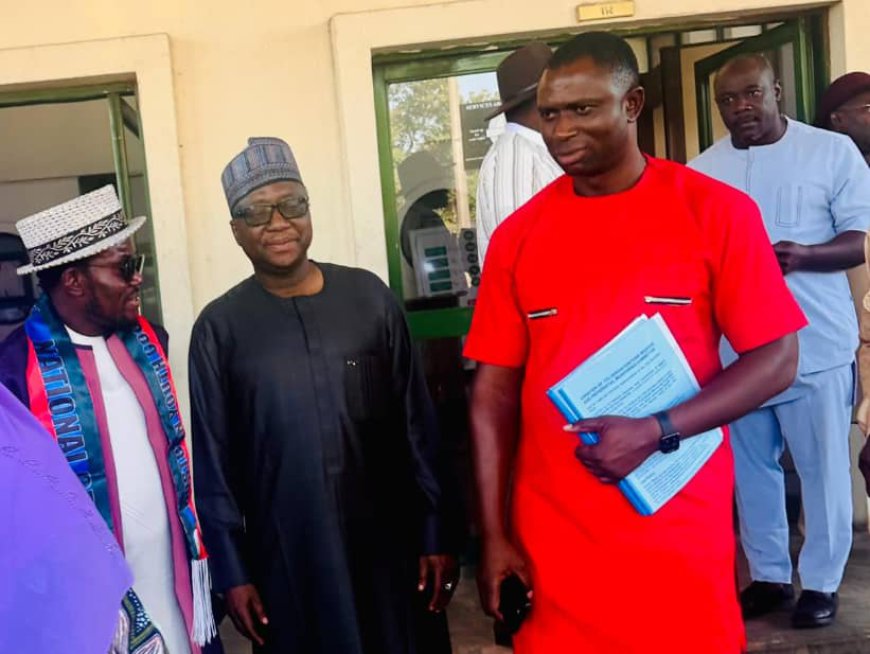
Across the Niger Delta, civil society groups maintain that despite decades of substantial derivation inflows, many host communities remain underdeveloped, grappling with environmental degradation, unemployment, and lack of basic infrastructure.
The group argued that the concentration of derivation resources in state government structures has, in many cases, failed to translate into measurable grassroots development, thereby fueling distrust and widening inequality in the region.
With the 2027 elections approaching, stakeholders say the issue has become even more urgent, warning that continued neglect of resource governance reforms could deepen political tension in the oil-rich region.
They urged President Tinubu, who has consistently emphasised reform, accountability, and inclusive governance, to seize the moment to correct what they describe as a long-standing administrative distortion in the management of derivation funds.

“Now is the time for decisive leadership,” the group stated. “If the constitutional intent of the derivation principle is to be preserved, then transparency, direct accountability, and community-focused management must replace the current system.”
What's Your Reaction?
 Like
0
Like
0
 Dislike
0
Dislike
0
 Love
0
Love
0
 Funny
0
Funny
0
 Angry
0
Angry
0
 Sad
0
Sad
0
 Wow
0
Wow
0