























2027: Ebipade Clark’s Door-to-Door Strategy Redefines Representation in Burutu Constituency



By Marvellous Doboro
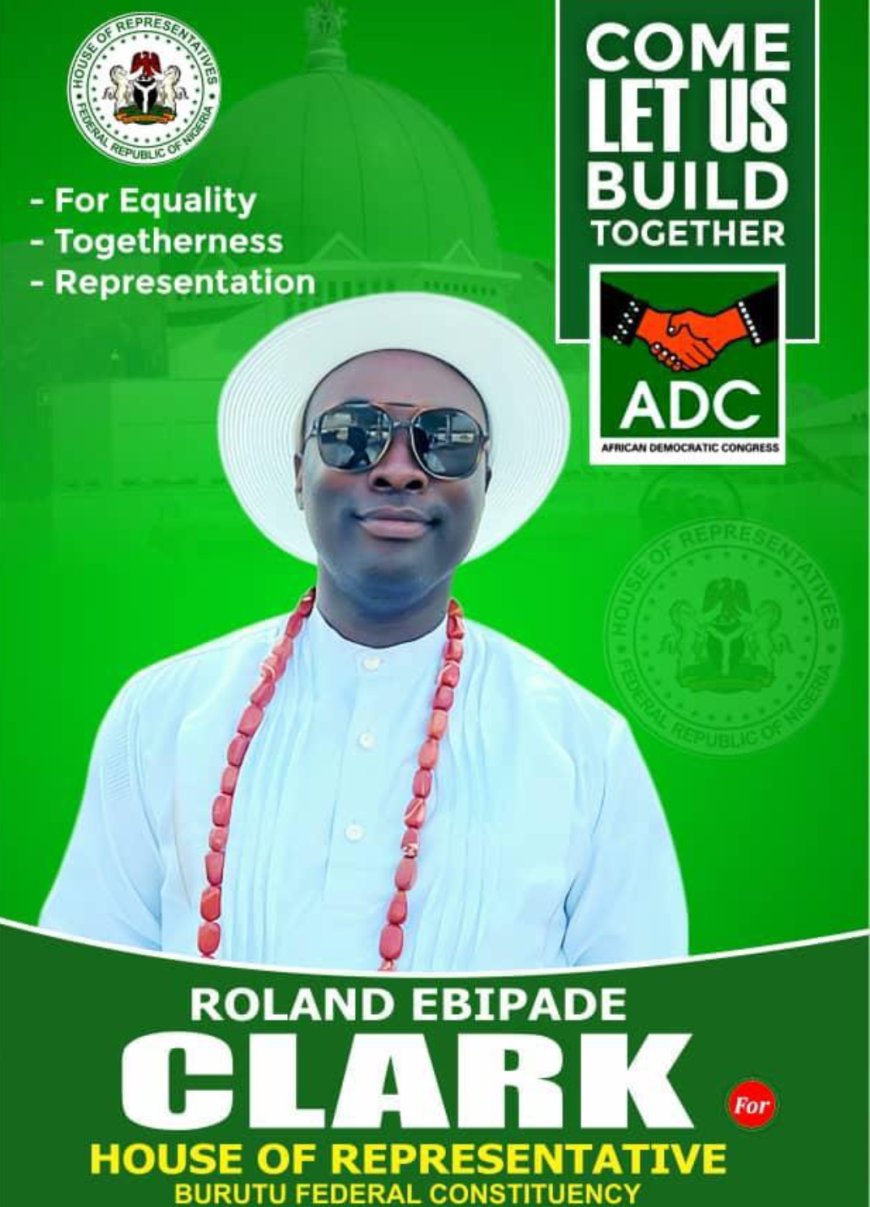
In the evolving political landscape of Burutu Federal Constituency, a new wave of grassroots engagement is taking center stage as Hon. Roland Ebipade Clark intensifies his campaign for the House of Representatives seat. With a message anchored on fairness, unity, and inclusive development, Clark is positioning himself as a people-centered candidate determined to reshape representation in the riverine constituency.
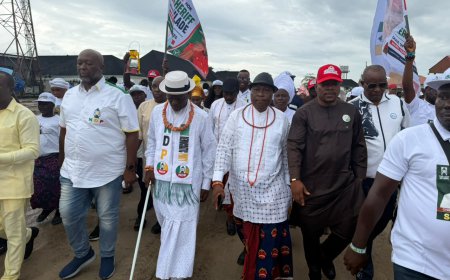
Unlike conventional campaigns often dominated by rallies and media optics, Clark’s approach reflects a deliberate return to the grassroots. His ongoing door-to-door outreach underscores a belief that true leadership begins with listening. Moving from community to community, engaging residents in direct conversations, he is not merely canvassing for votes but building trust—one household at a time.
At the heart of his campaign lies a simple yet resonant promise: equality for all communities within Burutu. For years, concerns over uneven development and perceived marginalization have shaped political discourse in the area. Clark’s message seeks to confront this narrative head-on, advocating for a fair distribution of projects and opportunities that cut across all wards and communities.
Equally central is his emphasis on unity. In a constituency marked by diverse communities and interests, Clark’s campaign calls for collective progress over division. He envisions a Burutu where political representation transcends sectional lines, fostering cooperation and shared growth.
Observers note that this blend of grassroots engagement and inclusive messaging could prove significant in an election where voters are increasingly demanding accountability and visibility from their representatives.
By encouraging constituents to actively participate—speaking with neighbors, mobilizing support, and reflecting on their leadership expectations—Clark’s campaign is also fostering a sense of civic responsibility among the electorate.
Beyond rhetoric, the candidacy of Roland Ebipade Clark represents a broader test of whether grassroots politics can still drive meaningful change in Nigeria’s democratic process. His supporters argue that leadership must not only be seen but felt—through presence, responsiveness, and tangible development.
As the election approaches, the people of Burutu Federal Constituency face a defining choice: to endorse a model of leadership rooted in proximity and participation, or to continue with the status quo. For Clark, the path is clear, build from the ground up, unite the people, and pursue development that leaves no community behind.
What's Your Reaction?
 Like
1
Like
1
 Dislike
0
Dislike
0
 Love
0
Love
0
 Funny
0
Funny
0
 Angry
0
Angry
0
 Sad
0
Sad
0
 Wow
0
Wow
0