











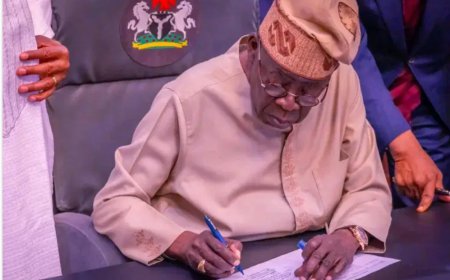






NDDI to Tinubu: Stop 13% Derivation to Governors Now — Set Up Presidential Monitoring Committees to Rescue Host Communities

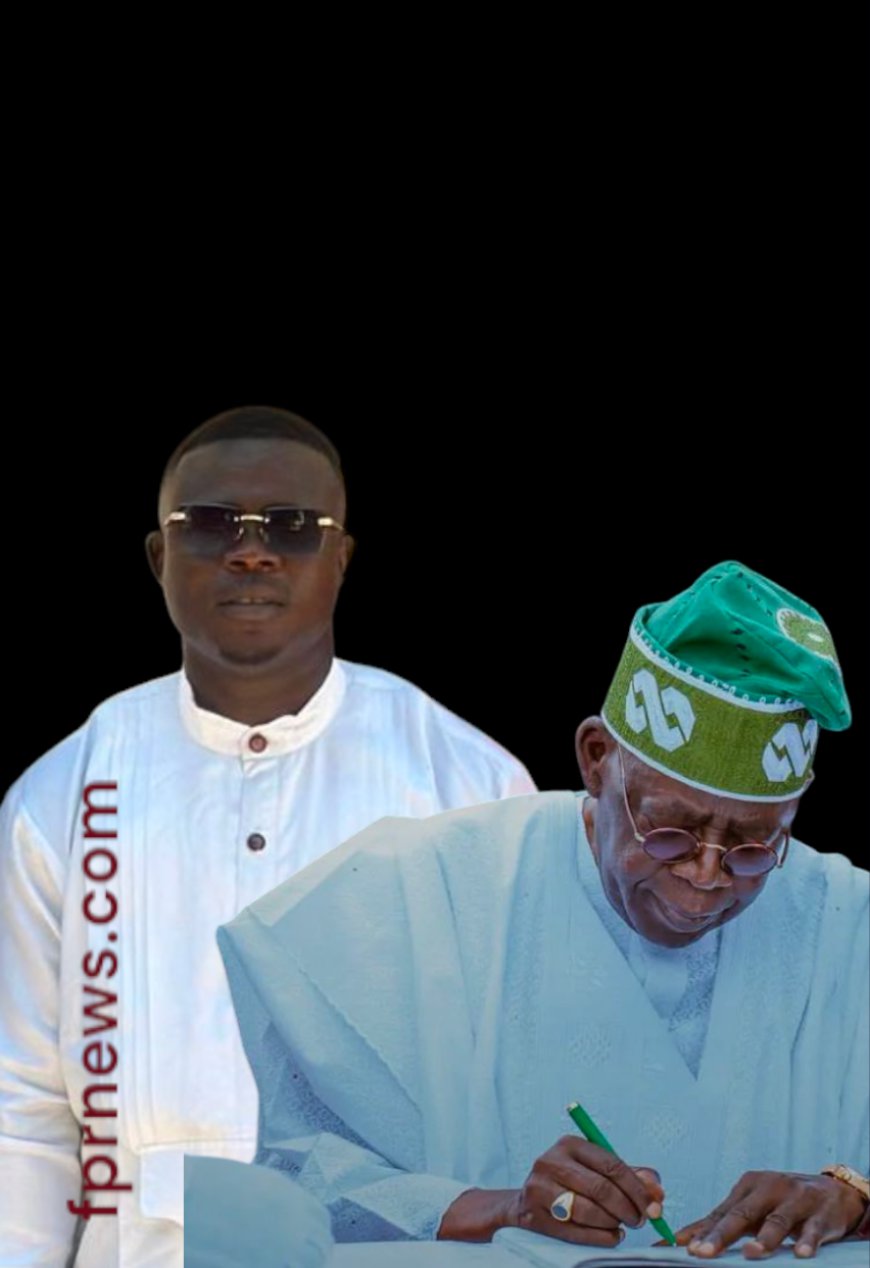


By Ezekiel Kagbala
The Niger Delta Development Initiative, (NDDI) led by Comrade Doboro Marvelous has issued a strong and urgent appeal to President Bola Ahmed Tinubu to immediately halt the direct payment of the 13 per cent derivation funds to state governments, warning that the current arrangement has become a conduit for waste, exclusion and systemic failure at the grassroots.
Aligning with the Niger Delta Civil society Forum, the group demanded the establishment of Presidential Monitoring Committees and independent Derivation Boards in all oil-producing states to guarantee transparency, accountability and direct development impact in host communities.
The call comes against the backdrop of staggering new revenue figures released by the National Bureau of Statistics (NBS) and the Federation Account Allocation Committee (FAAC), showing that nine oil-producing states received N620.23 billion in derivation funds between January and May 2025—a massive 101.3 per cent increase from the N308.19 billion shared in the same period of 2024.
A breakdown of the figures shows that Delta State alone received N185.16 billion, followed by Bayelsa (N130.21bn), Akwa Ibom (N124.79bn), and Rivers State (N114.06bn). Others include Edo (N18.60bn), Ondo (N15.51bn), Imo (N14.48bn), Abia (N8.99bn), and Anambra (N8.42bn).
Notably, the four top-earning states—Delta, Bayelsa, Akwa Ibom and Rivers—cornered over 88 per cent of the total derivation funds within just five months, while some states recorded dramatic year-on-year increases, including Abia (205%), Imo (183%), Anambra (126%) and Bayelsa (122%).
The 13 per cent derivation, enshrined in Section 162(2) of the 1999 Constitution, was designed to compensate oil-producing areas for environmental damage and to stimulate development. However, NDDI insists that the policy has been grossly betrayed in practice.
Speaking forcefully on the issue, National Coordinator of NDDI, Comrade Doboro Marvelous, described the current system as a monumental failure.
“Over N620 billion was paid out in just five months, yet oil-bearing communities remain devastated, polluted and abandoned,” Doboro said. “This is irrefutable evidence that paying the 13 per cent derivation through state governments has failed completely.”
He accused state governments of diverting funds meant for host communities, leaving residents of oil-producing areas to contend with environmental destruction, unemployment and collapsing social infrastructure.
“The figures expose a scandal. If these funds were truly reaching the grassroots, the Niger Delta would not look the way it does today,” he declared.
NDDI called on President Tinubu to exercise executive authority to suspend direct derivation payments to states and replace the system with independent Derivation Boards and Presidential Monitoring Committees in each oil-producing state.
According to the group, the proposed boards should comprise representatives of host communities, civil society organisations, and relevant federal agencies, with strict oversight mechanisms and clear mandates to fund environmental remediation, roads, schools, healthcare, clean water and sustainable livelihoods.
The demand comes amid renewed national agitation over the derivation formula. In October 2024, the House of Representatives scheduled a debate on a constitutional amendment bill seeking to increase derivation from 13 per cent to 50 per cent, while more states—including Enugu and Niger—are pushing to be recognised as derivation beneficiaries.
However, NDDI warned that any increase or expansion without reforming the management structure would only multiply corruption and deepen underdevelopment.
“Our position is firm,” Doboro stressed. “Before increasing the percentage or adding new states, the Federal Government must first fix the broken system. The money must be taken closer to the people through transparent, monitored derivation boards.”
The group expressed confidence that President Tinubu, known for his reform posture, has the political will to end what it described as the hijack of derivation funds and finally ensure that oil-producing communities feel the true benefits of the resources extracted from their land.
What's Your Reaction?
 Like
0
Like
0
 Dislike
0
Dislike
0
 Love
0
Love
0
 Funny
0
Funny
0
 Angry
0
Angry
0
 Sad
0
Sad
0
 Wow
0
Wow
0