

















Stolen Justice: The Untold Story of Nigeria’s 13% Derivation Crisis,


By Ezekiel Kagbala
For more than Three decades, Nigeria’s 13 per cent derivation fund, a constitutional provision designed to compensate oil and gas-producing communities for the destruction of their land, livelihoods and environment has remained trapped in controversy.
But beyond policy debates lies a deeper and more troubling story: one of political resistance, institutional failure, and the systematic exclusion of the very communities the fund was created to protect.
Across the creeks and riverine settlements of the Niger Delta, frustration has matured into a bitter question: Was the 13% derivation ever truly intended to reach the grassroots, or was it deliberately structured to be captured by political power?
In Section 162(2) of the 1999 Constitution (as amended) provides that not less than 13 per cent of revenue derived from natural resources shall be returned to the area of derivation. For host communities, this was understood as recognition of decades of environmental devastation polluted rivers, destroyed farmlands, lost fishing livelihoods, and social dislocation.
However, investigations by Focal Point Reports reveal that while the Constitution promised justice, the implementation architecture quietly shifted control away from communities.
When the administration of President Olusegun Obasanjo commenced disbursement of the 13% derivation in the early 2000s, payments were routed directly to state governments. Though procedurally defensible within Nigeria’s fiscal structure, this decision effectively removed host communities from the centre of the policy and placed their constitutional entitlement under political control.
Documents and accounts obtained by FocalPoint Reports confirm that the Revenue Mobilisation Allocation and Fiscal Commission (RMAFC), following sustained pressure from oil-producing communities, proposed a bill to the 6th National Assembly in 2005. The bill sought to establish Derivation Boards — independent bodies that would administer the 13% fund strictly for the benefit of host communities.
The bill failed, multiple stakeholders interviewed including civil society actors and community leaders, consistently point to strong political resistance from governors of oil-producing states as a decisive factor. Passage of the bill would have reduced state-level control over the funds and introduced community-focused accountability.
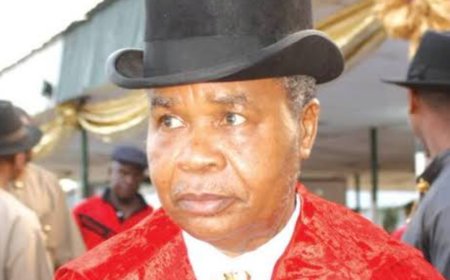
At the forefront of the long-running advocacy is the Host Communities of Nigeria Producing Oil and Gas (HOSCON), led by its founding father, Chief Dr. Wellington Okrika, CON, Bolowei and Traditional Prime Minister of Gbaramatu Kingdom. Okrika continue to roar as the Unrelenting Voice from the Creeks as State governments retained control and host communities remained spectators.
For years, HOSCON has pursued what it describes as a constitutional struggle not for new privileges, but for the enforcement of existing rights.
The organisation’s campaign has involved policy engagement, public advocacy, petitions, media engagements, and direct dialogue with national institutions.
In September 2008, after formal engagement with HOSCON leadership, the Chairman of RMAFC publicly stated in the press that the 13% derivation was constitutionally conceived as compensation to oil-producing communities for loss of land, livelihood and ecological stability.
That statement, reported by national newspapers at the time, reinforced the argument that the current practice deviates from the original intent of the Constitution. Yet, despite this official acknowledgment, no structural reform followed.
In May 2014, leaders of oil-producing communities formally addressed President Goodluck Jonathan, accusing the system of illegal and unconstitutional implementation of the derivation framework. They demanded urgent constitutional alignment to ensure that grassroots communities, not political structures, benefited from the funds.
In December 2018, a delegation of HOSCON met President Muhammadu Buhari. According to the delegation, the late president agreed that host communities deserved direct benefit from the derivation fund as a matter of constitutional right and gave assurances of intervention.
For many in the Niger Delta, this pattern has become painfully familiar acknowledgment without action, promises without policy, sympathy without structure.
If the 13% derivation was achieving its constitutional purpose, conditions in oil-producing communities would reflect meaningful development. Instead, Focal Point Reports findings across several host communities reveal persistent deprivation.

Gas flaring continues. Youth unemployment remains high. Entire communities sit atop the wealth that sustains the Nigerian economy yet remain trapped in poverty.
This contradiction has fueled a growing belief among community leaders that the problem is not merely mismanagement but structural exclusion deliberately sustained by political interests.
With President Bola Ahmed Tinubu on board, pressure is intensifying for more than ceremonial concern. Legal scholars, civil society groups and constitutional advocates insist that the derivation question represents a defining governance test for the current administration.
Key demands emerging from stakeholder engagements monitored by Focal Point Reports include:
A judicial or constitutional clarification on the rightful beneficiaries of the 13% derivation Revival of the Derivation Board framework earlier proposed by RMAFC
Strong legislative oversight on how derivation funds are spent by state governments
Formal inclusion of host communities in governance structures tied to resource-based funds
Without these, observers warn, the derivation fund will remain a symbolic constitutional provision disconnected from social justice.
A National Question That Refuses to Disappear. The 13% derivation debate has outgrown policy arguments. It now speaks to deeper questions of trust, fairness and national integrity.
For organisations like HOSCON and leaders such as Chief Dr. Wellington Okrika, the struggle continues not as political agitation but as a constitutional demand. For the Nigerian state, it remains an unresolved test of credibility. And for millions living in oil-producing communities, it is not theory it is the daily reality of neglect amid abundance.
What's Your Reaction?
 Like
0
Like
0
 Dislike
0
Dislike
0
 Love
0
Love
0
 Funny
0
Funny
0
 Angry
0
Angry
0
 Sad
0
Sad
0
 Wow
0
Wow
0