




















13% Derivation: How a Constitutional Right Was Hijacked, Oil Communities Betrayed



By Ezekiel Kagbala
For decades, the oil-rich Niger Delta has remained the economic heartbeat of Nigeria, yet its people continue to bear the burden of environmental devastation, poverty, and neglect.
At the centre of this long-standing injustice lies a constitutional provision that was meant to offer relief and development: the 13 per cent derivation principle enshrined in Section 162(2) of the 1999 Constitution (as amended).Instead of serving its intended beneficiaries the oil-producing communities the fund has become a subject of controversy, diversion, and political capture.
The 13% derivation principle was designed as a form of resource justice. It recognizes the sacrifices of host communities whose lands, waters, and livelihoods have been degraded by decades of oil exploration. The spirit of the law was clear: resources derived from a people’s land should translate into tangible development for those people.
However, in practice, the implementation of this constitutional right has been widely criticized as a distortion of justice. Rather than flowing directly into community-based development structures, The funds are paid to state governments, where transparency and accountability often disappear. For many oil-producing communities, the result has been continued underdevelopment, polluted ecosystems, unemployment, and broken infrastructure, despite billions of naira allocated in their name.
When the derivation principle gained renewed attention during the early 2000s, oil-bearing communities saw hope. Advocacy by community leaders and civil society groups pressured the federal government to respect the constitutional provision.
This agitation led to formal implementation during the Obasanjo administration, but with a critical flaw: the funds were channelled solely through state governments, rather than through independent derivation boards or community-driven structures.
The consequence has been what many activists describe as a “hijack” of a constitutional right. The people for whom the provision was created remain spectators, while political elites control the resources. This has fueled distrust, anger, and renewed agitation across the Niger Delta.
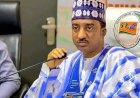
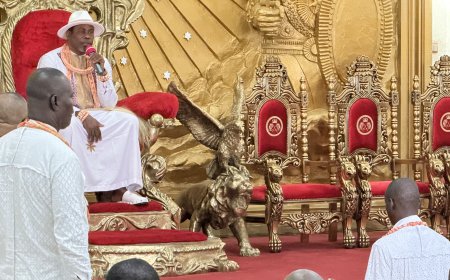
Among the most consistent voices in this struggle is Chief Dr. Wellington Okrika, CON, founding father of the Host Communities of Nigeria Producing Oil and Gas (HOSCON) and Traditional Prime Minister of Gbaramatu Kingdom.
For years, Okrika has argued that the derivation fund must be rescued from political capture and returned to its original purpose: direct development of oil-bearing communities.
Through advocacy, policy engagement, and grassroots mobilization, Chief Okrika has continued to push for the establishment of independent Derivation Boards that would ensure transparency, community participation, and measurable impact. His position is simple but powerful: no community that produces the wealth of a nation should live in poverty.
Despite his sustained efforts, successive governments have failed to adopt the structural reforms required to make the derivation principle truly meaningful at the grassroots.
In recent years, the Niger Delta Civil Society Forum (NDCSF) has emerged as a coordinated platform amplifying the voices of oil-producing communities. The Forum has intensified calls on the administration of President Bola Ahmed Tinubu to move beyond political rhetoric and take concrete constitutional action.
The NDCSF argues that the Tinubu government has both a legal obligation and a moral duty to ensure the full, transparent, and community-centered implementation of Section 162(2).
Their demands include:
The establishment of a Presidential Monitoring Committee on Derivation Funds
The creation of independent Derivation Boards as earlier proposed by the Revenue Mobilization Allocation and Fiscal Commission (RMAFC)
Direct involvement of host communities in the management and oversight of derivation resources
Full public accountability on how derivation funds are disbursed and utilized
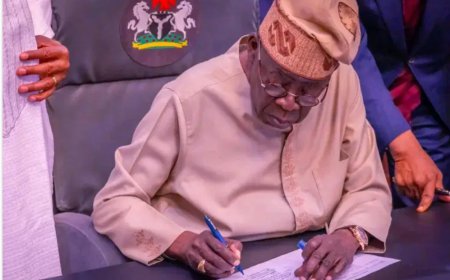
According to the Forum, anything short of these reforms amounts to a continuation of the betrayal suffered by Niger Delta communities for decades.President Tinubu’s administration has repeatedly emphasized constitutionalism and rule of law.
The struggle over the 13% derivation principle therefore represents a critical test of that commitment. Implementing the provision in both letter and spirit would not only restore hope to millions of marginalized citizens but also strengthen national unity and trust in governance. The Niger Delta is not asking for charity. It is demanding justice backed by the Constitution.
The story of the 13% derivation is, ultimately, a story of broken promises — but it is also a story of resilience. Through the unwavering advocacy of leaders like Chief Dr. Wellington Okrika and the organized pressure of groups like the Niger Delta Civil Society Forum, the struggle continues.
The question before Nigeria today is simple yet profound:
Will the nation continue to benefit from the resources of the Niger Delta while abandoning its people, or will it finally honour the Constitution and restore dignity to the communities that sustain the economy?
Powered by
Niger Delta Civil Society Forum
Led by Ezekiel Kagbala
08038905146
What's Your Reaction?
 Like
0
Like
0
 Dislike
0
Dislike
0
 Love
0
Love
0
 Funny
0
Funny
0
 Angry
0
Angry
0
 Sad
0
Sad
0
 Wow
0
Wow
0