





























EDITORIAL: Progress Made by Ke-Town; Concerns for Oil Companies, their Activities in the Niger Delta



by Ezekiel Kagbala
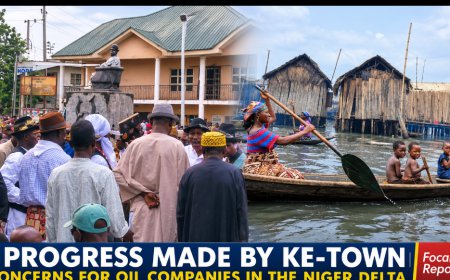
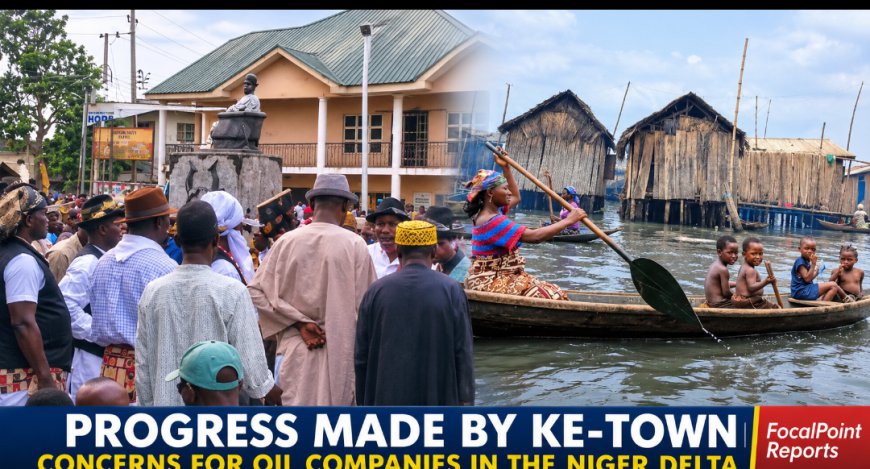
Ke-Town in Degema, Rivers State, Nigeria represents a case study on development and corporate responsibility within the Niger Delta.
It lies within the mangrove swamps of the eastern Niger Delta and is one of the riverine communities closely associated with the region’s oil and gas activities.

The community raises a crucial question: should communities that host oil and gas facilities continue to suffer lack of basic development infrastructures while companies make millions of dollars from their resources? The Petroleum Industry Act (PIA), 2021, among other innovations, aims to accelerate the governance of the industry and guarantee host communities’ benefits from oil and gas activities.
The Act’s Host Communities Development Trust (HCDT) gives petroleum operators an opportunity to satisfy their corporate social responsibilities to communities that host their oil and gas activities.
The true litmus test for the legislation will be in its full implementation. Meanwhile, oil companies should rise above the legal framework, work out their obligations, and ensure fair and just administration of host community development funds and support projects that alleviate the true needs of the communities.
The reported grassroots interventions associated with the administration of Dr. Ibifuro Francis Sokari, including the distribution of 90,000 exercise books and writing materials, engagement of community members to monitor the process, among other best practices, should be sustained and scaled up.
The reported grassroots interventions associated with the administration of Dr. Ibifuro Francis Sokari, including the distribution of 90,000 exercise books and writing materials, engagement of volunteer teachers and efforts to repair electricity infrastructure, highlight the importance of practical interventions in addressing the challenges facing riverine communities.
These initiatives, however, should be distinguished from projects directly financed through the PIA’s HCDT framework. Their respective funding sources, implementing authorities and measurable outcomes must be clearly established. Sustainable development requires both responsible public administration and effective implementation of oil companies’ statutory obligations.
Beyond funding development projects, petroleum companies operating in the Niger Delta should reconsider the location of their corporate headquarters and major decision-making offices.
Companies extracting resources from Rivers, Delta, Bayelsa and other oil-producing states should establish substantial operational and administrative headquarters within the region where they operate.
This is not merely a question of corporate addresses. Locating headquarters in the Niger Delta can bring decision-makers closer to host communities, improve responsiveness to environmental emergencies, create skilled employment, stimulate local businesses and increase the region’s participation in the economic activities generated by the petroleum industry.
When critical decisions are taken far away from the communities bearing the environmental and social consequences of oil production, accountability and timely intervention can become more difficult. A stronger corporate presence in the region would help bridge this gap, provided it is accompanied by genuine local employment, transparent governance and effective environmental management.
The Federal Government and relevant regulatory agencies should therefore encourage oil companies to decentralise their operations and establish meaningful regional headquarters in their areas of activity, while ensuring that any requirements are consistent with applicable laws and regulations.
Equally important, HCDT trustees, community representatives and petroleum operators must publish credible information on contributions, expenditure, project selection and implementation. Host communities should have meaningful participation in determining priorities, while independent monitoring should help ensure that development funds deliver measurable results.
Ke-Town’s development experience should serve as a reminder that the Niger Delta deserves more than promises, occasional interventions and corporate public-relations campaigns. Communities that sustain the nation’s petroleum industry deserve visible, lasting improvements in their living conditions.
The PIA provides an important framework, but its promise will remain unfulfilled unless oil companies implement its provisions faithfully and host-community development becomes a measurable corporate responsibility rather than a box-ticking exercise.
The message is clear: oil companies must implement the PIA, invest responsibly in their host communities and bring their major decision-making structures closer to the Niger Delta. The region should not merely supply Nigeria’s oil wealth; it should also benefit meaningfully from the indu
stry that depends on its resources.
What's Your Reaction?
 Like
0
 Dislike
0
 Love
0
 Funny
0
 Angry
0
 Sad
0
 Wow
0