





















CEPEJ Organises Capacity-Building in Warri, Outlines Path to Peaceful Coexistence Among Ijaw, Itsekiri, Urhobos in Delta



By Tessy Ogbemi
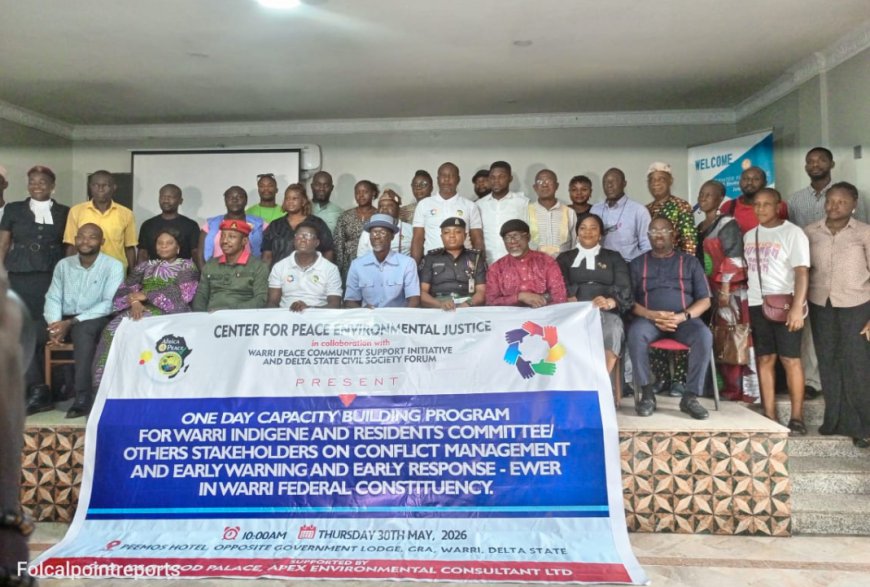
WARRI, DELTA STATE — In a proactive effort to strengthen peace and promote unity in the oil-rich city of Warri, the Centre for Peace and Environmental Justice (CEPEJ), in collaboration with the Warri Peace Community Support Initiative and the Delta State Civil Society Forum, has organised a one-day capacity-building training for members of the Warri Indigene and Residents Peacebuilding Committee.
The training, held on Thursday in Warri South Local Government Area of Delta State, was designed to equip participants with the skills needed to identify, report, and analyse conflict risks, particularly those arising from inter-ethnic tensions and political disputes within the Warri Federal Constituency.
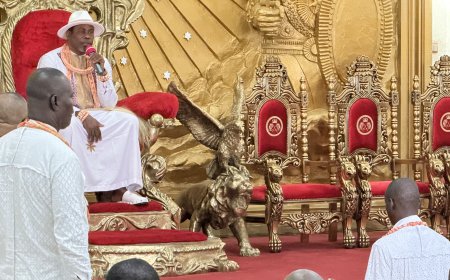
The initiative, led and sponsored by the CEPEJ National Coordinator, Chief Comrade (Dr.) Sheriff Mulade, brought together a broad coalition of stakeholders, including community leaders, government representatives, security agencies, and civil society organisations, with the shared goal of preventing conflict and sustaining peace in the region.
Speaking at the event, Mulade emphasised that peaceful coexistence among the Ijaw, Itsekiri, and Urhobo ethnic groups remains inevitable, stressing that no group can displace another from Warri. He advocated the adoption of what he described as the “3Cs” — Communication, Cooperation, and Coexistence — as the foundation for lasting peace.
According to him, the Peacebuilding Committee, established in March 2026, was created in response to tensions arising from the ward delineation exercise conducted by the Independent National Electoral Commission (INEC) across Warri North, Warri South, and Warri South-West local government areas.
“This programme is targeted at strengthening the capacity of the Warri Indigene and Residents Peacebuilding Committee to de-escalate tensions and foster unity among the Ijaw, Itsekiri, and Urhobo communities,” Mulade said.
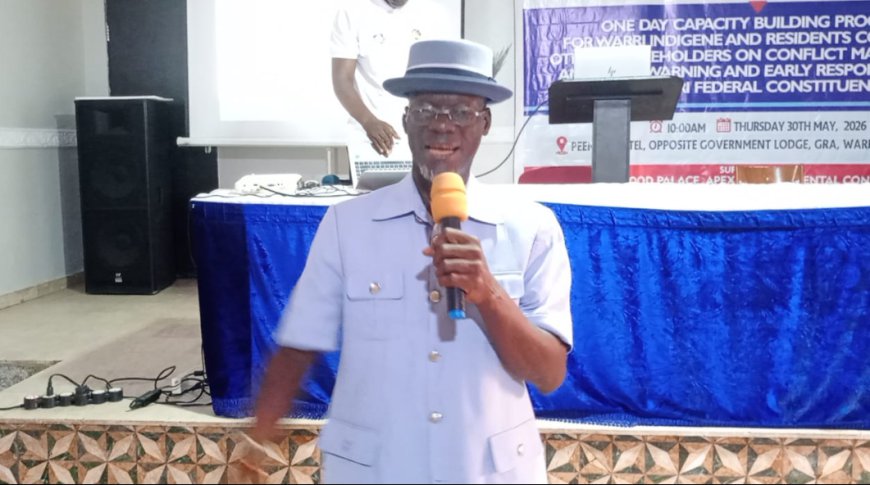
He noted that while government and stakeholders have made efforts to maintain peace in Warri, sustaining it requires continuous engagement and collective responsibility. “Peace cannot be achieved by government or security agencies alone; it must involve everyone,” he added.
Mulade further warned of potential conflicts ahead of the 2027 general elections, noting that political actors often exploit ethnic and religious sentiments for electoral advantage. He urged politicians to refrain from divisive rhetoric and instead promote inclusivity and unity.
A key focus of the training was the Early Warning and Early Response (EWER) system, with participants receiving practical guidance on identifying early signs of conflict and taking timely action to prevent escalation. Demonstrations were also conducted on effective communication with security agencies and relevant stakeholders.
One of the resource persons, Mrs. Martha Onose, Executive Director of the Community Empowerment and Development Initiative (CEDI), highlighted the economic impact of conflicts on families, noting that disputes often lead to loss of livelihoods, destruction of property, and broader socio-economic setbacks.
Also speaking, Mr. Fater Kyegh, an Early Warning and Early Response Analyst under a European Union-supported project, explained that early warning mechanisms are applicable not only in large-scale conflicts but also in everyday situations. He stressed that early response involves immediate and coordinated actions once potential threats are identified.
The organisers commended security agencies for their continued role in maintaining stability in Warri and reiterated the need for sustained collaboration among all stakeholders.
The capacity-building initiative underscores a renewed commitment to dialogue, inclusiveness, and community-driven peace efforts, as stakeholders work towards ensuring long-term harmony among the Ijaw, Itsekiri, and Urhobo communities in Delta State.
What's Your Reaction?
 Like
0
Like
0
 Dislike
0
Dislike
0
 Love
0
Love
0
 Funny
0
Funny
0
 Angry
0
Angry
0
 Sad
0
Sad
0
 Wow
0
Wow
0