























Ex-Deputy Gov, Calls for N-Delta Unity to Safeguard Nigeria's Oil Assets



By Tesay Ogbemi
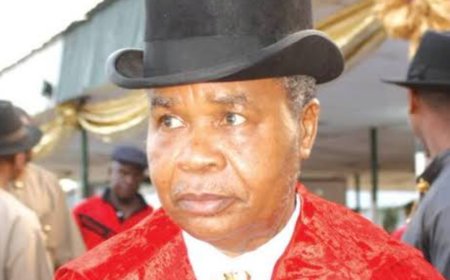
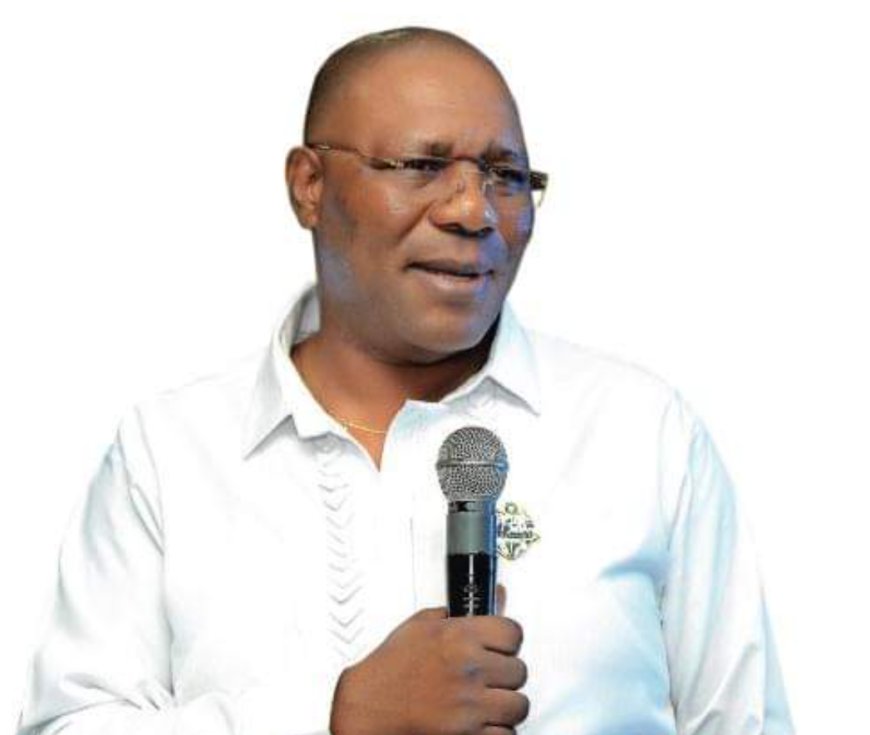
The immediate past Deputy Governor of Delta State, Dcn. Kingsley B. Otuaro, has called for stronger unity among stakeholders in the Niger Delta to safeguard Nigeria’s critical oil infrastructure, describing the protection of petroleum assets as essential to the country’s economic stability and development.
Otuaro made the call in a statement addressing the state of the nation’s oil sector, where he emphasized that Nigeria’s economic strength has long depended on the stability and productivity of the petroleum industry. According to him, crude oil remains the backbone of national revenue, funding key sectors such as infrastructure development, education, healthcare, and other essential public services.
He stressed that protecting the infrastructure that supports oil production should not be seen as the responsibility of a few organizations alone, but as a collective national duty involving government, communities, and all stakeholders.
The former deputy governor commended the Federal Government for recognizing and supporting organizations working to secure oil infrastructure in the Niger Delta. He specifically acknowledged the role of Tantita Security Services Nigeria Limited, noting that the company’s operations have significantly strengthened surveillance and protection of vital national assets across the region.
Otuaro recalled that Nigeria faced a major challenge in recent years due to widespread crude oil theft, pipeline vandalism, and organized economic sabotage. At a critical point in 2022, he noted, the nation’s oil production dropped to nearly one million barrels per day, far below its production capacity and significantly short of the quota allocated by the Organization of the Petroleum Exporting Countries.
He explained that the situation had serious financial implications for the country, with billions of dollars in national revenue lost annually as a result of illegal bunkering and repeated pipeline breaches.
However, Otuaro noted that strengthened surveillance efforts and the involvement of local expertise in protecting pipelines across the creeks and waterways of the Niger Delta have contributed to a gradual recovery in oil production. According to him, Nigeria’s oil output has improved considerably, rising to over 1.6 million barrels per day, a development he said has restored confidence in the nation’s ability to secure its most important economic assets.
“These gains are not just statistics,” Otuaro stated, explaining that improved production translates directly into increased revenue that supports government obligations and drives national development.
“When crude oil theft is reduced and pipelines are secured, the entire country benefits. Salaries are paid, roads are constructed, schools are funded, and national economic stability is strengthened,” he said.
He further noted that securing oil pipelines that run through difficult terrains, including deep creeks, mangrove forests, and remote communities, requires sustained vigilance, operational discipline, and strong collaboration with host communities.
According to him, experience has shown that integrating indigenous knowledge and local participation into national security strategies significantly improves the protection of critical assets.
While acknowledging the progress made so far, Otuaro expressed concern over what he described as a troubling trend in public discourse within the Niger Delta. He warned that some individuals and groups have recently engaged in campaigns aimed at discrediting or undermining ongoing efforts to secure oil infrastructure.
He noted that while constructive criticism is necessary in a democratic society, narratives driven by misinformation, rivalry, or narrow interests ultimately harm the region they claim to represent.
Otuaro also pointed out that internal divisions have historically slowed the development of the Niger Delta. According to him, competing interests, unnecessary conflicts, and the tendency to undermine initiatives that could benefit the region have contributed to the perception of the oil-rich area as struggling with underdevelopment despite its vast natural wealth.
He therefore urged individuals and groups whose actions undermine legitimate efforts to secure oil facilities to reconsider their approach, stressing that stakeholders must prioritize the protection of the region’s shared economic heritage.
Instead of division, he called for stronger cooperation among community leaders, youth groups, traditional institutions, civil society organizations, and other stakeholders across the Niger Delta.
“When pipelines are vandalized, it is our rivers and lands that suffer pollution. When crude oil is stolen, the region loses valuable development opportunities,” he said.
He warned that declining oil production weakens the national economy and has consequences that affect every state in the federation.
Otuaro therefore urged Niger Delta stakeholders to rally behind genuine initiatives aimed at safeguarding oil facilities, stressing that supporting efforts to curb crude oil theft and pipeline vandalism is both an economic necessity and a patriotic responsibility.
He concluded by emphasizing that Nigeria’s prosperity depends on unity of purpose and a collective commitment to protecting the resources that sustain the national economy.
“The Niger Delta must stand together in defense of the resources that sustain Nigeria,” he said.
What's Your Reaction?
 Like
0
Like
0
 Dislike
0
Dislike
0
 Love
0
Love
0
 Funny
0
Funny
0
 Angry
0
Angry
0
 Sad
0
Sad
0
 Wow
0
Wow
0