

























ABUJA SUBMERGED:‘We have not seen anything like this before’

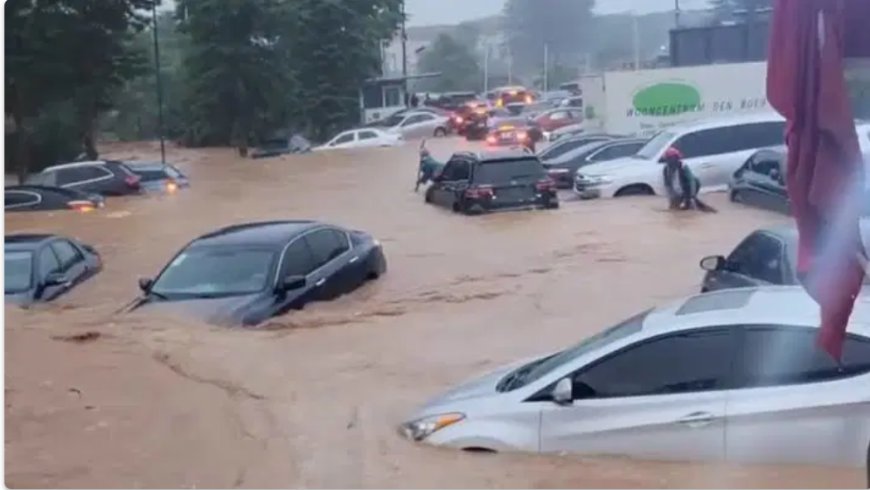


ABUJA — The Federal Capital Territory (FCT) has been thrown into a renewed debate over urban planning, drainage infrastructure and the unchecked development of waterways following a devastating flood that submerged parts of Abuja, including high-profile districts such as Asokoro, Maitama, Guzape, Garki, Wuse and Lokogoma.
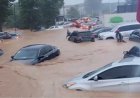
The downpour, which intensified on Tuesday night, left residents counting the cost of destroyed homes, vehicles, business premises and personal belongings, with several communities experiencing flooding on a scale residents said they had never witnessed before.
The incident has also triggered strong action from the FCT Administration, with Minister Nyesom Wike ordering the demolition of structures built on water channels, regardless of the status or ownership of the affected properties.
The minister also ordered a ban on the conversion of designated green areas, parks and gardens into commercial car dealership lots across the nation's capital.
The measures followed growing concerns that the rapid expansion of Abuja, combined with the obstruction of natural waterways, inadequate drainage capacity and the loss of open spaces, has worsened the city's vulnerability to flooding.
Flood Sweeps Through Abuja's High-Brow Districts
Residents of Asokoro, Maitama and Guzape were particularly shocked by the scale of the flooding.
In Asokoro, homes and compounds were inundated, while vehicles were stranded on flooded roads. Residents said water entered buildings within a short period, forcing some families to move valuables and household members to upper floors.
Maitama, traditionally regarded as one of Abuja's most exclusive residential districts, was equally affected, with homes, businesses and vehicles reportedly damaged by floodwaters.
Guzape suffered significant damage as well, particularly around developing estates and construction sites where natural water paths have increasingly been replaced by roads, buildings and other structures.
A resident who has lived in Asokoro for more than a decade described the flooding as unprecedented.
“This is the first time since I came to Abuja that I am experiencing this,” the resident said.
The flooding also affected domestic staff and low-income workers living in boys' quarters and other structures located at the lower sections of residential compounds.
Experts Blame Drainage, Uncontrolled Development
Beyond the heavy rainfall, residents, urban planners and engineers have raised questions about the city's drainage infrastructure and the enforcement of Abuja's original master plan.
The argument is that natural waterways and drainage corridors have increasingly been obstructed by buildings, fences, roads and other developments.
In parts of Guzape, where extensive construction has taken place over the years, residents and construction workers said floodwaters descended from surrounding hills and overwhelmed existing drainage systems.
The rapid expansion of concrete surfaces has also reduced the amount of water that can naturally be absorbed into the ground, increasing surface runoff during intense rainfall.
Concerns have equally been raised about the silting and inadequate maintenance of some drainage channels, as well as indiscriminate dumping of refuse.
Former FCT Council Chairman of the Nigeria Union of Journalists, Emmanuel Ogbeche, attributed part of the crisis to what he described as the gradual abuse of Abuja's master plan.
Ogbeche questioned the allocation and conversion of green areas, gardens and open spaces, warning that Abuja could not sustain its development by continuously replacing natural spaces with concrete structures.
Wike Orders Demolitions
Following the flood, Wike moved to enforce stricter measures against structures obstructing waterways.
The minister ordered the immediate demolition of buildings and other structures found standing on water channels, irrespective of the identity or influence of their owners.
The directive is aimed at restoring natural waterways and preventing further obstruction of drainage routes across the capital.
Demolition teams subsequently moved into parts of Maitama and surrounding areas, where homes, fences and commercial structures were pulled down.
Some affected property owners and business operators, however, complained about the manner in which the exercise was carried out, arguing that adequate notice should have been provided before demolition.
The development has renewed calls for the FCT Administration to combine enforcement with proper mapping, drainage rehabilitation and transparent planning.
Ban on Commercial Car Lots in Green Areas
In another major intervention, the FCT Administration banned the conversion of designated green spaces, parks and gardens into commercial car dealership lots.
The directive, disclosed by the Senior Special Assistant on Public Communications and Social Media to the FCT Minister, Lere Olayinka, forms part of measures to address worsening flooding and protect Abuja's urban drainage and environmental systems.
The administration said the loss of designated absorption zones and recreational spaces had contributed to disruption of natural drainage patterns.
To enforce the directive, the FCT Administration has established a dedicated task force to monitor affected locations and ensure the immediate clearance of illegal car lots operating on protected spaces.
The minister has also ordered an administrative investigation into officials suspected of issuing approvals for the commercial use of areas designated as green spaces, parks and gardens.
Residents Demand Sustainable Solution
While residents have welcomed government intervention, many say demolition alone will not solve Abuja's flooding problem.
They are demanding regular desilting of drainage channels, restoration of blocked waterways, protection of green areas and stronger enforcement of the city's planning regulations.
Residents also want the government to publish clear flood-risk maps and identify areas where future development should be restricted.
The latest flooding has changed the perception of flood risk in Abuja, with residents of previously considered safe districts now taking precautions whenever heavy rainfall is forecast.
For many residents, the central question is no longer whether Abuja can flood, but whether the city is prepared to prevent another disaster of the same magnitude.
As the FCT Administration begins its enforcement campaign, attention will now turn to whether the measures will be sustained beyond the immediate aftermath of the flood — and whether Abuja's original master plan can be effectively restored and enforced.
What's Your Reaction?
 Like
1
Like
1
 Dislike
0
Dislike
0
 Love
0
Love
0
 Funny
0
Funny
0
 Angry
0
Angry
0
 Sad
1
Sad
1
 Wow
0
Wow
0