























N-Delta Doesn’t Need Obasanjo’s Sympathy — NDCSF Urges Tinubu to Correct Failure



By Ebi Martha
President Bola Ahmed Tinubu has been urged to correct what the Niger Delta Civil Society Forum (NDCSF) describes as the failure of former President Olusegun Obasanjo’s administration to ensure that the constitutional 13 per cent derivation principle translates into tangible development for oil-producing host communities.
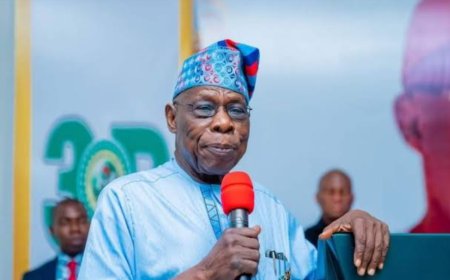
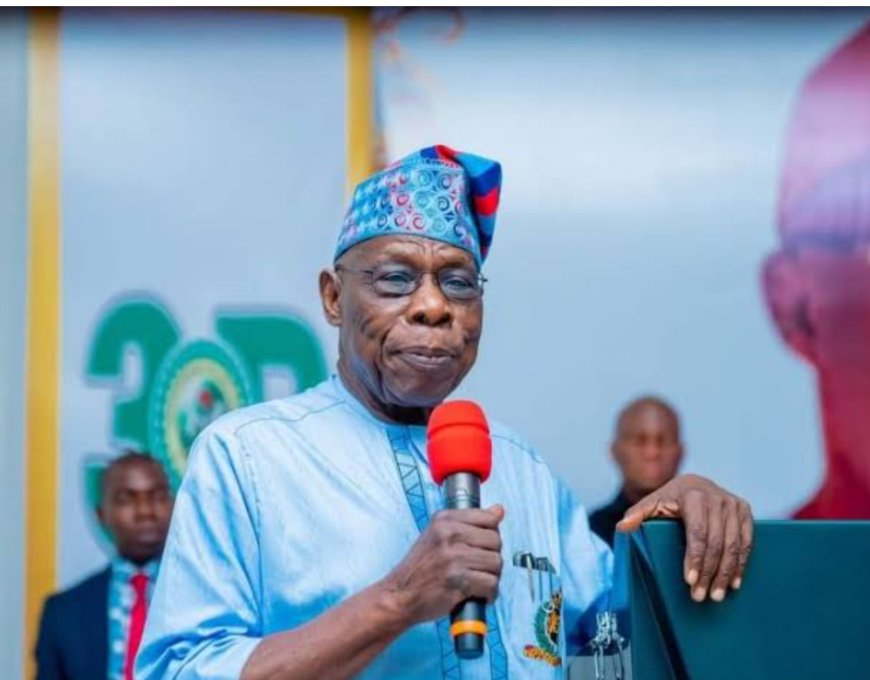
The Forum’s Coordinator, Comrade Ezekiel Kagbala, made the call on Tuesday in Warri, Delta State, while reacting to Obasanjo’s remarks on Monday at the flag-off of the Crude Distillation Unit (CDU) of the $1 billion Azikel Refinery in Obunagha, Bayelsa State. Obasanjo had lamented that oil-producing states and communities were yet to receive a fair share of the nation’s oil wealth, suggesting that the 13 per cent derivation allocation could be increased.
However, the NDCSF described the former president’s expression of sympathy as diversionary, arguing that the fundamental problem is not merely the percentage allocated but the failure to ensure that host communities benefit directly from the funds.
Kagbala accused Obasanjo’s administration of failing to establish an effective mechanism to channel derivation funds to communities bearing the environmental and economic costs of oil exploration. He insisted that host communities fought for the 13 per cent derivation, enshrined in Section 162(2) of the 1999 Constitution, to secure compensation and development for their oil-bearing lands—not merely to enrich state governments.
“The Niger Delta does not need Obasanjo’s sympathy over a failure his administration had the opportunity to address. The region needs justice, accountability and a system that delivers derivation funds to the communities for which they were intended,” Kagbala said.
He recalled that during Obasanjo’s presidency, federal first-line charges, including NNPC joint-venture funding and external debt servicing, were deducted from oil revenues before the 13 per cent derivation allocation was calculated, arguing that the deductions reduced the funds flowing to the region.
He further maintained that host communities were excluded from directly benefiting from the allocation meant to address the loss of fishing grounds, livelihoods and other economic opportunities.
The Forum cited historical precedents, noting that former President Shehu Shagari established a Presidential Monitoring Committee to oversee the 1.5 per cent derivation fund, while former military Head of State, General Ibrahim Babangida, established the Oil Mineral Producing Areas Development Commission (OMPADEC) after increasing derivation to three per cent.
According to the NDCSF, these measures demonstrate the possibility of creating dedicated institutions to improve transparency and accountability in managing derivation funds. It argued that the failure to establish an effective framework for direct host-community benefits has allowed political structures to dominate the process while affected communities continue to bear the consequences of oil production.
The Forum therefore called on President Tinubu to issue an executive order establishing a dedicated 13 per cent derivation fund in every oil- and gas-producing state, backed by a Presidential Monitoring Committee to ensure transparency, accountability and measurable results.
The NDCSF maintained that the 13 per cent derivation principle must deliver real development to oil-producing communities, not remain a constitutional promise administered through political structures.
It urged Tinubu to address the longstanding gap between derivation allocations and conditions in host communities, insisting that those whose lands and resources sustain Nigeria’s oil economy deserve direct and verifiable benefits.
What's Your Reaction?
 Like
0
Like
0
 Dislike
0
Dislike
0
 Love
0
Love
0
 Funny
0
Funny
0
 Angry
0
Angry
0
 Sad
0
Sad
0
 Wow
0
Wow
0