





















TWO SUMMITS, ONE SOBERING QUESTION: Niger Delta’s Trillion-Dollar Paradox — Where Did the Money Go?




FocalPoint Reports Editorial
By Ezekiel Kagbala
The Niger Delta has never suffered from a shortage of revenue. Its enduring problem, as recent interventions by prominent economic and business leaders suggest, is what successive political administrations have done—or failed to do—with the enormous resources that have accrued to the region.
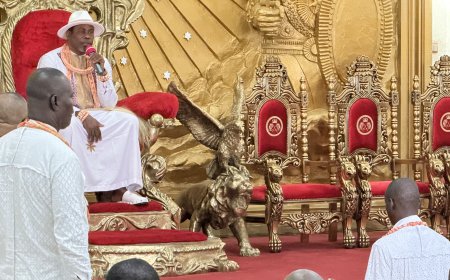
That uncomfortable question came into sharper focus at the Niger Delta Economic and Investment Summit 2026 in Port Harcourt, where businessman and economist Atedo Aig-Imoukhuede, delivering the keynote address, reportedly drew attention to the extraordinary volume of money that has flowed into the Niger Delta over the years without a corresponding transformation in infrastructure and living standards.
In remarks highlighted by Vanguard columnist Dele Sobowale, Aig-Imoukhuede was cited as saying that the Niger Delta received about $160 billion over 27 years.
At an exchange rate of N1,400 to the dollar, Sobowale calculated that the figure would amount to roughly N224 trillion.
The figures, whether viewed through the prism of dollars received or naira allocated, raise a question that should concern every Niger Deltan: How can a region that has generated and received such enormous resources remain so visibly underdeveloped?
That is not merely an economic question. It is a question of leadership, accountability, planning and priorities.
The uncomfortable question of resource control
For decades, resource control and derivation have occupied a central place in the political struggle of the Niger Delta.
One of the most prominent voices in that struggle was former Akwa Ibom State Governor Obong Victor Attah, who advocated greater resource control on the argument that communities producing the nation’s wealth deserved a greater share of the resources generated from their land.
The eventual increase in derivation revenue was expected to provide states in the oil-producing region with greater fiscal capacity to address infrastructure deficits, improve education and healthcare, stimulate economic activity and raise the standard of living.
But the question confronting the region today is whether increased revenue has produced the transformation that resource control advocates envisaged.
The evidence visible across many communities presents a troubling contradiction: vast oil wealth on one hand, and inadequate roads, unreliable public utilities, environmental degradation, unemployment and widespread poverty on the other.
Summits cannot substitute for governance
The proliferation of economic summits across the region also deserves scrutiny.
Economic and investment summits can provide valuable platforms for experts, investors, policymakers and businesses to exchange ideas. But a summit cannot build a road, establish an industry or transform a local economy.
The real test begins after the microphones are switched off.
Sobowale’s commentary points to the participation of internationally recognised economist Dr Ngozi Okonjo-Iweala at an earlier Delta State economic summit and argues that expert recommendations frequently receive applause but are not necessarily translated into sustained government action.
That observation deserves broader consideration.
The Niger Delta does not lack reports, committees, conferences, declarations or development blueprints. What it repeatedly lacks is continuity between policy pronouncements and measurable implementation.
A region cannot summit its way out of underdevelopment.
The accountability deficit
There is also a legitimate need to examine the record of political leadership in the region.
Sobowale’s article revisits the cases of former governors who faced allegations or criminal proceedings over the management of public resources. One notable historical example is former Bayelsa State Governor Diepreye Alamieyeseigha, whose corruption case was extensively reported by Vanguard in 2005.
The charges against Alamieyeseigha included allegations concerning the acquisition of properties and transfers of funds. These were allegations prosecuted through the legal system and should be distinguished from a final judicial determination on every individual allegation.
The significance of revisiting such cases is not to reopen old political battles. It is to underline the larger question of whether public institutions have been sufficiently effective in protecting the enormous resources entrusted to governments in the Niger Delta.
Where public funds are lost through corruption, waste or poor governance, the consequences are ultimately borne by ordinary citizens.
A missing road is not an abstract statistic to the farmer whose produce cannot reach the market.
A collapsed public hospital is not merely a budgetary failure to the family forced to travel hundreds of kilometres for medical treatment.
An absent industrial base is not simply an economic indicator to the young graduate who remains unemployed despite living in a region responsible for a substantial share of Nigeria’s petroleum wealth.
The region must look beyond oil
The more profound lesson from Aig-Imoukhuede’s intervention is that revenue alone does not create development.
Money must be converted into productive assets.
It must finance education that produces employable young people, healthcare systems that protect human capital, roads and transport networks that connect markets, electricity that supports manufacturing, agriculture that creates jobs, and institutions capable of attracting and retaining private investment.
The Niger Delta also needs a deliberate transition from an economy centred overwhelmingly on oil revenue to one built around diversified production.
That means agriculture, fisheries, manufacturing, tourism, technology, logistics, maritime industries and small and medium-sized enterprises must become part of a coherent regional economic strategy.
The responsibility cannot rest entirely with Abuja
There is a tendency in Niger Delta discourse to place almost every failure at the door of the Federal Government.
Federal policies, environmental issues, oil-sector regulation and revenue allocation are certainly important parts of the region’s development story.
But state and local governments cannot escape responsibility.
Governors control substantial public resources. State assemblies exercise oversight functions. Local governments have statutory responsibilities. Traditional institutions and community organisations influence local priorities. Business leaders, civil society organisations and citizens also have roles to play.
The question therefore should not simply be “What has Abuja done for the Niger Delta?”
It should equally be:
“What have Niger Delta leaders done with what the region has received?”
That is the harder question—and perhaps the more important one.
From political slogans to measurable results
The Niger Delta has heard generations of promises.
It has witnessed campaigns built around resource control, development commissions, intervention funds, special projects and economic summits.
Yet the ultimate measure of leadership should be neither the number of conferences organised nor the size of speeches delivered.
It should be the quality of life of the people.
How many communities have reliable electricity?
How many young people have meaningful employment?
How many roads have been completed and maintained?
How many functional hospitals and schools exist?
How much private investment has been attracted?
How much internally generated revenue can states raise without relying overwhelmingly on federal allocations?
How effectively are public officials held accountable?
Those are the questions that should dominate the next Niger Delta economic
The intervention attributed to Atedo Aig-Imoukhuede, as reported and discussed by Dele Sobowale in Vanguard, should therefore not be reduced to another provocative headline about billions of dollars.
It should trigger a deeper conversation about the political economy of the Niger Delta.
If the region has received resources running into hundreds of billions of dollars over decades, then the central challenge is no longer simply how to secure more money.
It is how to ensure that whatever resources come in are converted into lasting development.
The people of the Niger Delta deserve more than ceremonies celebrating development plans that disappear after the closing speeches.
They deserve institutions that work, leaders who account for public resources, policies that survive changes in government and development projects whose impact can be measured.
The region has spent decades demanding a greater share of the nation’s wealth.
The next chapter must answer a more difficult question:
When the money came, what did its leaders do with it—and what tangible legacy did they leave for the people?
That is the accountability conversation the Niger Delta can no longer afford to postpone.
For feedback call O8038905146
What's Your Reaction?
 Like
0
Like
0
 Dislike
0
Dislike
0
 Love
0
Love
0
 Funny
0
Funny
0
 Angry
0
Angry
0
 Sad
0
Sad
0
 Wow
0
Wow
0