


























Why Heritage Energy Will Not Stop Crude Oil Flow as Spill in Odidi Worsens



Production expansion, pipeline economics and regulatory silence raise questions as Delta riverine communities count the cost
By Ezekiel Kagbala
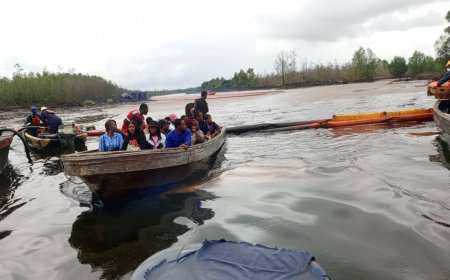
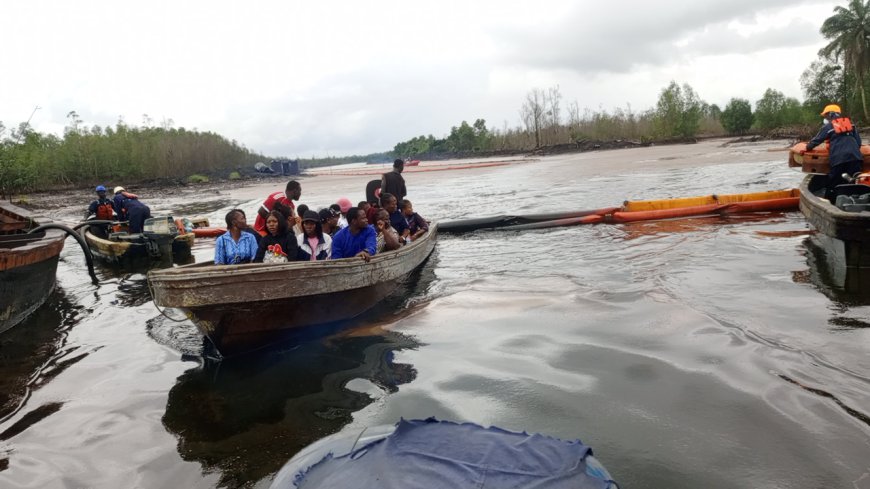
For more than six months, crude oil has reportedly continued to contaminate waterways, fishing grounds and communities around Odidi and neighbouring riverine settlements in Delta State, while the oil infrastructure associated with the Trans-Forcados Pipeline remains operational.
The central question confronting regulators is no longer simply what caused the spill, but why crude evacuation has not been comprehensively suspended at the affected section until the source is permanently isolated and the environmental damage independently assessed.
An investigation sponsored by the Niger Delta Civil Society Forum (NDCSF) indicates that the continuing dispute is occurring against the backdrop of an aggressive production-expansion programme by Heritage Energy Operational Services Limited (HEOSL), operator of OML 30.
Public records confirm that HEOSL took over operatorship of OML 30 in 2017. Heritage says the block includes eight producing fields and that the 87-kilometre Trans-Forcados Pipeline forms part of the infrastructure acquired with the OML 30 interest.
The company says the pipeline has capacity of about 600,000 barrels per day and is also used by other operators.
The commercial significance of the pipeline is therefore difficult to ignore.
In March 2025, the Nigerian Content Development and Monitoring Board reported that Heritage and its joint-venture partners were targeting an increase in production from about 45,000 barrels per day to 100,000 barrels per day by 2030.
The same report disclosed that Heritage was pursuing a four-rig campaign, new drilling and other production-enhancement projects, while also investing in the Trans-Forcados Pipeline to support expected increases in crude production from OML 30 and other assets using the evacuation system.
That creates the central investigative dilemma: how can production be expanded safely when communities downstream of the evacuation infrastructure say crude continues to enter their environment?
NDCSF's position is that production targets cannot take precedence over the immediate containment of an uncontrolled environmental incident.
The organisation argues that where a pipeline or associated facility is suspected to be compromised, the priority should be isolation, containment, repair, independent verification and remediation—not maintaining crude flow while the environmental consequences continue.
The current controversy dates to a reported February 2026 spill.
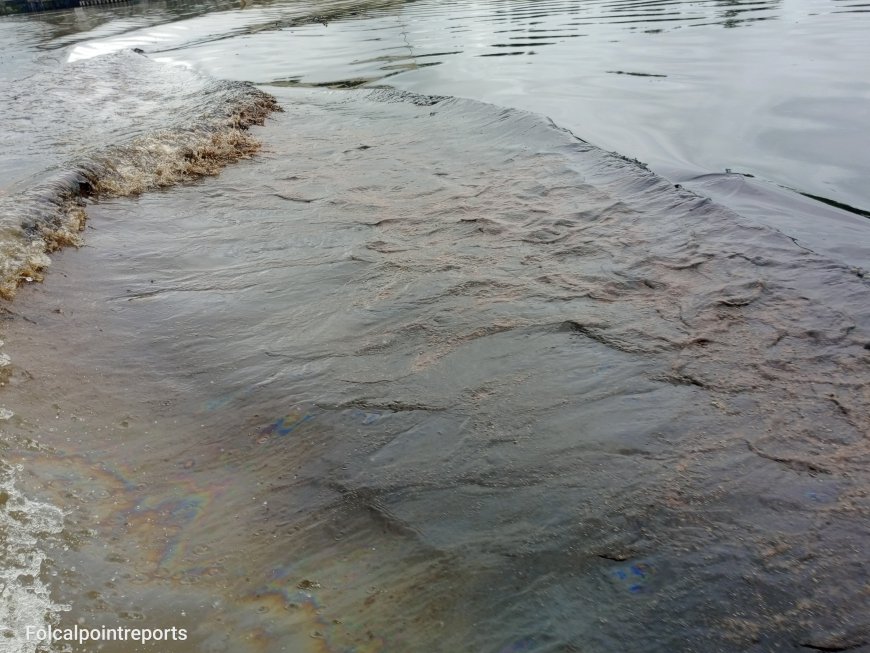
Odidi Federated Community petitioned the National Oil Spill Detection and Response Agency (NOSDRA), alleging that crude had continued to escape from the Trans-Forcados Pipeline since February 19, 2026.
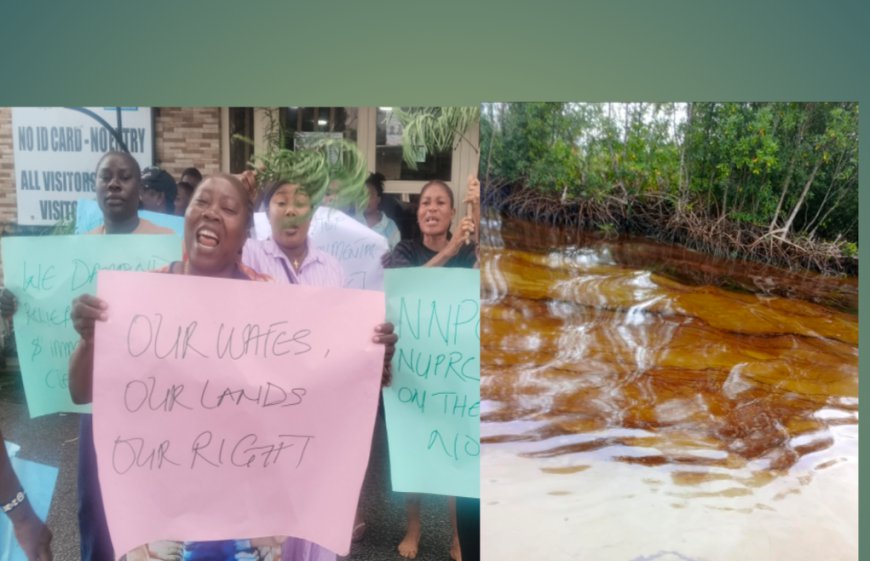
According to the petition reported in July, a Joint Investigation Visit was conducted on February 20 and 21, with corrosion and operational error identified as causes. The community alleged that the affected section had not been permanently repaired and that the continuing pollution had damaged fishing grounds, waterways, drinking water and aquatic life.
By September, reports from the affected communities indicated that the crisis had persisted for approximately seven months.
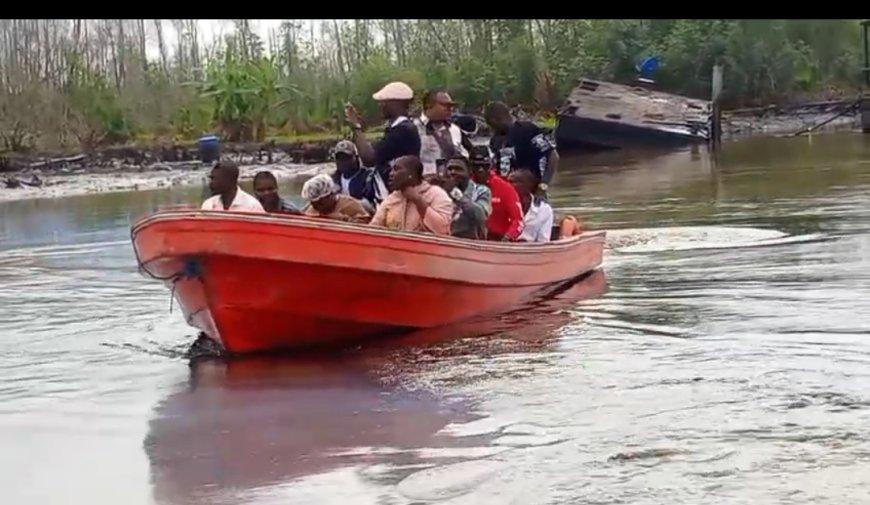
Residents of Odidi, Kantu, Keremor and other settlements reportedly warned that they could shut down the pipeline if the authorities failed to address the situation.
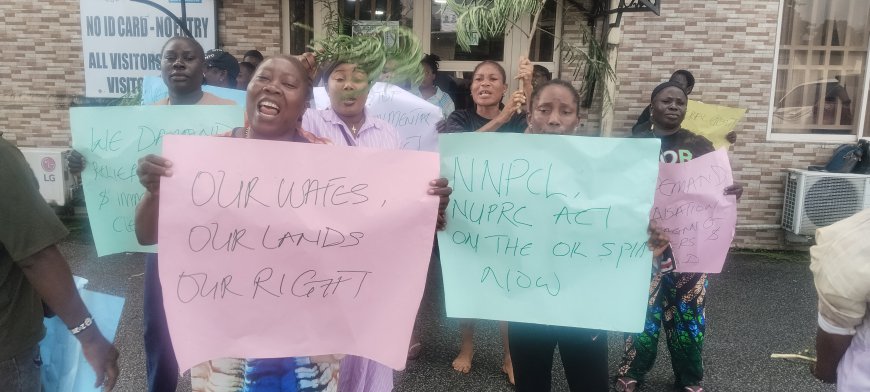
Women from Odidi also protested at HEOSL's operational office in Edjeba, Warri, on September 1, demanding an end to the pollution, environmental cleanup and relief for affected residents.
An oil spill lasting days presents an emergency. A spill continuing for months becomes a question of containment, engineering response, regulatory enforcement and institutional accountability.
WHY HAS PRODUCTION CONTINUED?There is currently insufficient public evidence to conclude that HEOSL has deliberately refused to stop operations because of crude prices or profit.
However, available corporate records establish a strong commercial incentive to maintain and increase production.
Heritage itself describes OML 30 as an asset with potential to stabilise and increase production and says the Trans-Forcados Pipeline generates revenue through tariffs paid by other operators using the infrastructure.
In 2025, the company also publicly linked its TFP rehabilitation programme to increased production.
This means that the pipeline is not merely an environmental liability. It is also a strategically important piece of oil-export infrastructure.
That raises questions for regulators:
Was the affected section isolated immediately?
If not, why not?
What engineering assessment determined that continued operation was safe?
Was an alternative evacuation route available?
What quantity of crude continued to pass through the affected system after the spill was detected?
Who independently verified the integrity of the pipeline before operations continued?
What did NOSDRA and NUPRC formally direct HEOSL to do?
These questions require documentary answers, not assumptions.
THE OML 30–OML 42 COMPLICATION
Another important issue uncovered by the investigation is that the public discussion has sometimes blurred different assets.
HEOSL is documented as the operator of OML 30, while the Trans-Forcados Pipeline serves crude from multiple assets.
OML 42, which includes the Odidi field, also historically initially depended on the TFP for crude evacuation before switching to Barging which involves loading crude oil onto large commercial barges towed by tugboats to move petroleum through shallow rivers, creeks, and coastal waterways where large oil tankers cannot go. That is exactly what
Neconde's records state that OML 42's liquids are transported through the Trans-Forcados system and also acknowledge repeated TFP failures associated with age, crude theft and sabotage.
The OML 42 joint venture subsequently developed an alternative evacuation route for some production.
THE PIPELINE'S AGE CANNOT BE IGNORED
The Trans-Forcados system is legacy infrastructure.
The Forcados oil pipeline system dates back to the Shell era, with the Forcados terminal commissioned in 1971. Industry records describe the TFP as the major trunk line feeding the Forcados export system.
There have also been longstanding concerns about the integrity and reliability of the system.
Neconde, whose OML 42 records include the Odidi field, acknowledges that frequent TFP failures linked to age, crude theft and sabotage affected the economics and efficiency of crude evacuation.
The investigative question, therefore, is not whether an ageing pipeline requires maintenance. It is whether continued operation after a confirmed or suspected integrity failure is compatible with the duty to prevent further pollution.
THE CLEAN-UP CONTRACT QUESTION
NDCSF is also seeking clarification over reports that contractors have been engaged for cleanup activities while crude production and evacuation continue through the broader system.
That issue requires transparent answers. If crude is still entering a contaminated area, cleanup alone cannot constitute a permanent solution.The sequence should be straightforward: stop or isolate the source; contain the crude;
repair the failed infrastructure;
verify the repair independently;
remove contaminated material;
restore affected waterways and land; provide medical and humanitarian assistance where required; then resume full operations only after technical and regulatory clearance.
Any deviation from that sequence should be publicly explained by the operator and the regulators.
THE HUMAN COST
Residents depend heavily on fishing and waterways for food and household income.
Reports from the affected communities have described destroyed fishing grounds, contaminated waterways and difficulties accessing safe water and sustaining livelihoods.
The humanitarian consequences are consequently potentially much wider than the physical footprint of the pipeline.
Every additional day of uncontrolled crude contamination can mean another day of lost fishing, damaged equipment, contaminated aquatic ecosystems and reduced household income.
That is why the NDCSF is demanding that the Federal Government treat the matter as an environmental and humanitarian emergency rather than solely as a dispute between an oil company and host communities.
REGULATORY ACCOUNTABILITY
The investigation also raises questions about the roles of NUPRC, NOSDRA and the Federal Ministry of Environment.
NUPRC maintains a regulatory framework covering health, safety, environment and communities, including guidelines on pipeline operation and maintenance.
THE PRODUCTION VERSUS PROTECTION DILEMMA
There is a broader contradiction at the heart of the matter.
Nigeria needs oil production and crude-export revenue. Heritage and its partners are publicly targeting significantly higher production from OML 30. At the same time, communities along the evacuation corridor are demanding protection from environmental damage.
Those interests do not necessarily have to conflict.
Production can continue where infrastructure is demonstrably safe. But where a particular facility presents an active environmental risk, the responsible question is whether that section should remain operational until the risk is eliminated.
The issue is therefore not whether Heritage should produce crude indefinitely or whether Nigeria should abandon oil production.
It is whether production should continue through infrastructure whose integrity is under serious dispute while communities report ongoing pollution.
NDCSF: GOVERNMENT MUST MOVE BEYOND PUBLIC STATEMENTS
The Niger Delta Civil Society Forum is calling on the Federal Government to compel a transparent technical investigation into the entire affected corridor and publish the findings.
NDCSF is also demanding that NUPRC and NOSDRA establish the precise source of the pollution, quan
tify the crude released, determine the extent of environmental damage and compel immediate containment and remediation.
What's Your Reaction?
 Like
0
Like
0
 Dislike
0
Dislike
0
 Love
0
Love
0
 Funny
0
Funny
0
 Angry
0
Angry
0
 Sad
0
Sad
0
 Wow
0
Wow
0