

























EDITORIAL: Federal Government, How Long Will Host Communities Be Denied Their Share of Gas Flare Penalties and 13% Derivation Funds?


.By Ezekiel Kagbala
The raging controversy surrounding the distribution of over ₦269 billion in gas flare penalty funds has once again illuminated one of the most enduring paradoxes in Nigeria's political economy: the communities upon whose lands the nation's prosperity is built remain trapped in a cycle of deprivation, environmental devastation and economic exclusion.
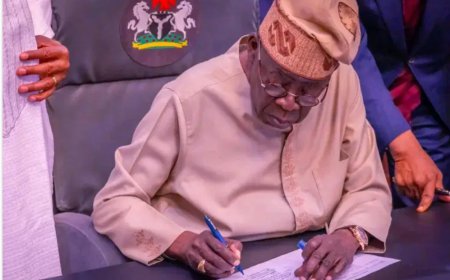
flare penalty funds in Nigeria are remitted directly to the Federation Account to be shared among the federal, state and local governments. Under executive directives such as those signed by President Bola Ahmed Tinubu as gas companies pay these fines (officially set at $2.00 per 1,000 standard cubic feet for major producers) to the Nigerian government, while the Nigerian Upstream Petroleum Regulatory Commission (NUPRC): The regulatory body responsible for tracking flare volumes, assess the fines.
In 2025, oil and gas companies operating in Nigeria paid a record ₦269.3 billion (estimated at $646 million) in gas flaring penalties. This represents a significant 86.24% increase compared to the ₦144.6 billion collected in 2024. Historically, these annual amounts fluctuated based on gas flaring volumes, compliance enforcement, and currency exchange rates:2025: ₦269.3 billion (~$646 million)2024: ₦144.6 billion. Between 2020 and early 2024, total cumulative earnings reported by the Central Bank of Nigeria (CBN) reached ₦ 381.59 billion.
The Federal Government must answer a simple but uncomfortable question: How long will oil and gas-producing communities be denied their rightful share of gas flare penalties and the constitutional 13% Derivation Fund?
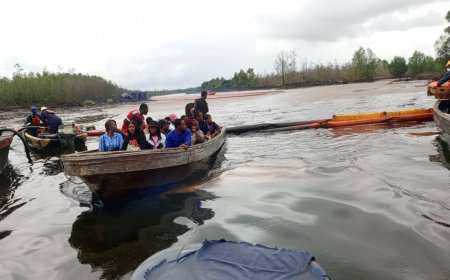
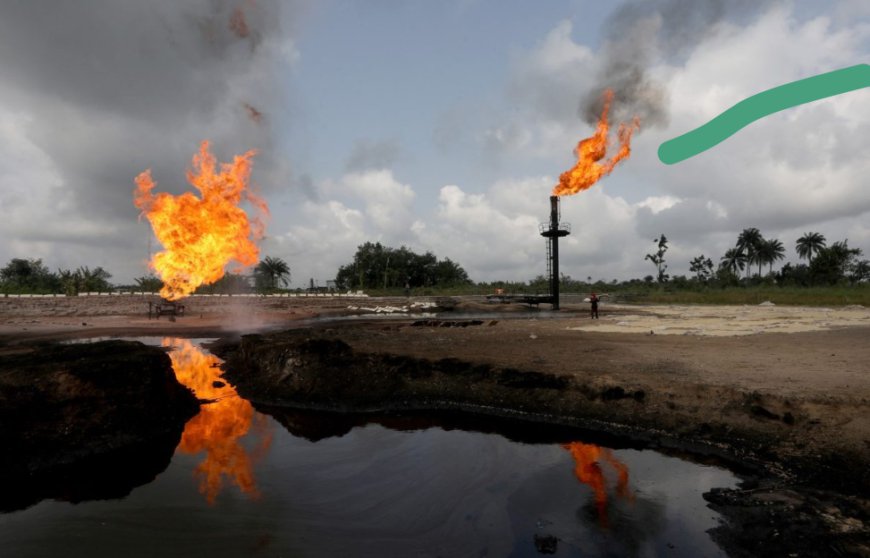
For decades, host communities in the Niger Delta have paid the price for Nigeria's oil and gas wealth. They have endured polluted rivers, destroyed farmlands, toxic gas flares, declining fisheries, environmental degradation and worsening public health conditions. Yet, while the nation benefits from the revenues generated from their lands, the communities themselves remain trapped in poverty and underdevelopment.
This contradiction has become even more glaring with the controversy surrounding the over ₦269 billion gas flare penalty funds remitted into the Federation Account.
Gas flare penalties are not ordinary government revenues. They are environmental compensation arising from violations that inflict damage on specific communities. They are punitive sanctions imposed on operators for environmental harm and public health risks caused by gas flaring.
The principle is straightforward: those who suffer the damage should receive the compensation.
Yet the Federal Government continues to treat gas flare penalties as national revenue for general distribution, while the communities that bear the environmental consequences receive little or nothing from the funds generated by their suffering.
Why should communities that inhale toxic emissions and live under gas flare stacks be excluded from compensation paid because of those same environmental violations?
Why should the victims of pollution watch as funds generated from their pain are shared elsewhere?
The same questions apply to the administration of the constitutional 13% Derivation Fund.
The derivation principle was established to recognize the unique burden borne by oil and gas-producing areas. It was intended as a mechanism of compensation and restorative justice for communities whose environment and livelihoods are impacted by resource extraction.
However, despite trillions of naira paid as derivation over the years, many host communities remain without basic infrastructure, quality healthcare, clean water, functional schools and economic opportunities. The people for whom the derivation principle was conceived continue to see little evidence of its impact.
This is why the growing demand for the direct remittance of derivation benefits to host communities can no longer be ignored.
President Bola Ahmed Tinubu's Executive Order No. 9 of 2026 demonstrated that the government can intervene to protect oil and gas revenues from leakages, distortions and unauthorized diversions. The same commitment should now be applied to protecting host community benefits.
If the Federal Government can safeguard Federation revenues, it should also safeguard compensation intended for host communities.
The time has come for President Tinubu to establish a transparent presidential framework that guarantees the direct administration of gas flare penalty funds and the direct remittance of the 13% Derivation Fund to oil and gas-producing communities through accountable community-based institutions.
Nigeria's gas sector generated billions of dollars in export earnings in 2026. Oil and gas revenues continue to sustain the Federation Account and finance government activities across the country. Yet the communities at the centre of this wealth creation remain among the least developed.
The Federal Government must recognize that compensation belongs to the victims of environmental harm, not to distant bureaucracies. Gas flare penalties should fund environmental remediation, healthcare, infrastructure and economic recovery in the affected communities. Likewise, the 13% Derivation Fund should reach the communities whose lands and livelihoods make those revenues possible.
Edirorial by Ezekiel Kagbala
Coordinator, Niger Delta Civil
Society Forum.
Feedback: Call Line: 08038905146
What's Your Reaction?
 Like
0
Like
0
 Dislike
0
Dislike
0
 Love
0
Love
0
 Funny
0
Funny
0
 Angry
0
Angry
0
 Sad
0
Sad
0
 Wow
0
Wow
0